Showing posts with label magical items. Show all posts

Monday, May 9, 2016

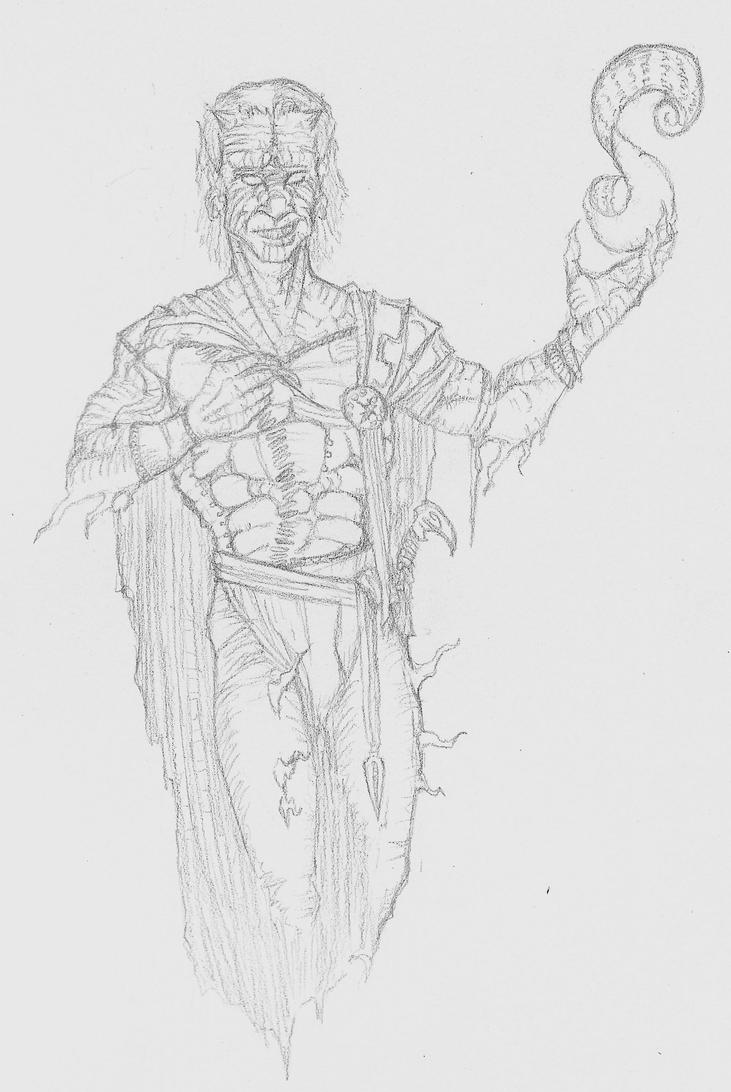
The Wizard's Staff

The use of magical wands and staves is as old as the Art itself. Most wizards wield staves because of the lack of time required to learn to use them. This, combined with a staff-wielding culture, has perpetuated their use as normal tools. Staves may also serve as a prop in old age, and many wizards remain ambulatory well into their twilight years. However, that doesn’t account for the great many magical staves and wands that have been crafted over the centuries, leaving one explanation that was posited by the Llyrian wizard Galthese the Wise:

“The staff and wand are traditional implements of magic. As matter that was formerly living, wood is tied into the natural radiations of magic that flow from the center of the earth. The rod, as a shape, is naturally attuned to various outflows of magic as well. It mimics the shape of the human finger, and thus can be used to manipulate the flow of the causal tide of energy that surrounds us. In essence, one places in the staff the potency to bend and manipulate magic itself. For this purpose, various woods and metals suit our needs to lesser or greater degrees...” (Galthese the Wise, Treatise on the Staff, IX Age)

A compiled list of various materials is presented below. These are taken partially from Galthese’s treatise and partially compiled from various and sundry other sources.

Ash. “Ashwood is the most holy of all trees. The barbarian Thegnar tribes revered it and it alone in the Dawn Age; they knew it instinctively. The great World-tree, Asca-Irminsul, is represented in each and every growing ash. Know that this holy tree is not to be touched in this realm!” (Agis the Unconquered, Declaration to the Skinchangers)

“The ash tree has many magical applications; the most famous are the Wands of High Sorcery, which have been immortalized in legend and song. Great magical staffs have been carved from it as well; It has been known to store great reserves of magical energy and I would not hesitate to call it the king of woods for that very reason. It is rare, but possible, for natural ash growing in the wild to trap pockets of latent magical energy and develop into something more than simple vegetation. This is complicated, of course, by the burning fury of northerners when you damage or cut down an ash tree. Thegnarians, Valelans, and even some Mileans view the ash as semi-sacred.” (Galthese)

Birchwood. “White like the ash, and indeed related to it through descent, the birch tree is a nice pick for a staff. Stylish! Many Dorlish wizards use birch; it’s not as presumptuous as ash nor as mundane as oak or bronzewood.” (Edeo Aspeki, Courtiers Guide to Wizards, X Age)

“The white wood of the birch is often compared with that of the ash tree. However, it is in many ways unsuitable for use in magical procedures. It makes a fine dust or powder for rituals requiring substances of that nature as, once burned, it can bind with magical humors present in the air. However, in its whole form it is too dense for the tides of magic to penetrate it. It is the foolish wizard indeed who attempts to enchant a birchwood wand or rod without first preparing it with potent resins, oils, and powders.” (Jiacamo di Tyrol, Myths of Magic, X Age)

Bleakwood. “A rare find indeed! Bleakwood has to be harvested in a particular manner and only grows in the swamps of Tyrolin. Dorlish mages generally eschew it due to its brutal nature and ties to bloodlust and madness in folklore. I do believe the Archmage General Enzeo Petrucci carried a staff of this nature!” (Reynarius di Llun, Staves and Things, X Age)

“Cut from the swamps of Tyrolin, Bleakwood has many uses commensurate with its rarity. Amulets and rings cut from it can protect the vital anima or essence of the wearer from outside attack. Tea brewed from the root of the bleakwood tree has been known to be extremely toxic; it may cause blindness and lameness as well as sapping the vital strength of the imbiber. However, when served to those on death’s door, it will either kill them within three hours or revive them.” (Solon Everwind, Lectures at the Polis, X Age)

Bronzewood. “Stone and bronzewood are the most commonly used materials for wizard’s staves. The reason for this is simple: they can withstand a great deal of stress, and there are mages who use their staves as offensive weapons. They can be found with relative ease (though not everywhere in the north). This is the same material used by shipwrights for the central mast of great cogs and carracks.

"It is widely believed that bronzewood and ironwood have no magical applications. This is generally false. Bronzewood was prized for its ability to contain the squirming and often volatile effects of alteration spells; Ironwood, in contrast, has a grain perfect for grasping the potent strands of high sorcery of all kinds. Ironwood bark may also be used as a cheap alternative base for scrolls as opposed to the much more expensive parchment or vellum. The same preparations must be applied, and the ink must be thickened by a factor of two to three times.” (Galthese)

Bone and Ivory. “Most sorcerers, wizards, mages, and magic workers fear using the living or formerly living matter of intelligent beings for their spells. They are squeamish, and allow the petty concerns of morality and the morés of Arunëian society to constrain their Art. ‘The bodies must be burned!’ the priests will shout, ‘destroy all the remains!’ Yet, there is potency in bone, for it remembers the essentia, the pattern, of the life that was lived within it. Necromancy worked with bone is particularly powerful, as one might imagine. “Yet feel bone in your hand! It is cold, almost lifeless. The pattern is faint. Now hold ivory in that selfsame hand and it will warm to your touch. Ivory is the queen of all necromantic material save for bone from the undead themselves. It contains within it a perfect duplication of the essere, the essentia, of the living being. It responds to life with warmth and eagerness for it recalls what it means to live.” (Cesiderus the Necromancer, On the Marrow, IX Age)

 Cedar. “O hardy cedar! You provide for us the fire of ascension, whereby the spirit may be carried into the West. Do your wonders there cease? Nay, for even the magician has said ‘cedar, thou art fine.’ For with the branch of cedar can-not one see into the future? Is it not perfect for divinatory auguries and rituals of all kinds? Yes! For the priests of the Weaver know its potency, and the Crippled God weaves not with an ashen loom, nor one of pine, but of cedar.” (High Oracle Jacynth, Devotions, VI Age)

Firwood. “Fir and pine are sacred to Eleia, and often associated with growth, virility, and health. Many cult-idols are made from firwood in the East, particularly in Llyris and former Llynder. Stonemark also has a special place for the fir, and sacred buildings are often braced and built with firwood.” (Ceylan the Thoughtful, Symbolism of the Sacred, X Age)

Hickory. “Hickory wood is similar to bronze or iron wood in that it has a heavy resistance to shock, is pliable, and is very strong. However, it grows in a narrower environment and is thought of with less prestige. There is a family of hickory trees known as the Wyrmwood Tree which grows where, long ago, draconic tombs and ruins stood. This tree is favored by those sages that study Wyrmlore for use in their rods, wands, and staves; whether or not it is actually attuned to wyrms or their shades is a matter of debate.” (Galthese)

Larch. “Larch is prized by builders for its sturdiness, durability, and waterproof nature. It’s resin is particularly thick and the wood is resistant to rot. This makes it a valuable asset to wizards, for it can withstand a great deal of essential pressure. Lesser materials might crack or shatter while channeling the energies required for potent summonings or invocations, but larch will bear up under the strain quite admirably. I have found that banding it with silver will reduce the effort in enchanting it and lessen the strain on the caster...” (Turin the Master, Letters to his Apprentice, IIX Age)

Oak. “Oakwood is a sturdy choice for a staff, and sees heavy use (along with bronze- and stonewood) with wizards from Atva-Arunë. This is probably because of its association with strength and sturdiness. The oak tree is also sacred to Haeron, and thus staves of oakwood are preferred by priests, travelers, and the devout.” (Ceylan)

“Banishments and abjurations are made simpler with oaken implements. The reason for this is complex, but in essence the strength of the oak and the depth of its roots provides a perfect metaphysical pattern or anima for spells of turning back, protecting, and cancellation. Does the lightning strike the mighty oak tree and fell it?” (Galthese)

Shieldwood. “The ubiquitous grey pine of the North, shieldwood is stout but must be dried over a long period and then treated to be worthwhile. It has no magical properties inherent in it, though again, ease of locating a shieldwood pine makes it quite cheap and easy to come by.” (Ceylan)

Stonewood. “The hearty Stonewood tree provides a sound foundation for staves and wands of all types. However, the expense of felling Stonewood when such trees are reserved for use as masts of large ships, makes it a difficult thing to obtain. Some wizards thus cultivate Stonewood trees of their own, and its presence in wizard’s gardens is a well-known attribute of Llyria.” (Galthese)

Willow. “Willow-wood is a fine choice for wands; it’s lack of firmness disguises a youthful and vital core that is perfect for weaving potent magic to it, but not for engaging in battle.” (Lydur of Soloth, The Heart of the Wand, VII Age)
           
“Willow wood is itself magical. The willow grows not only where the land is right, but also where the tide of magic breathes from the earth in abundance. The ancient willow groves of Sylvasil were once host to great gatherings of nouriso enchanters, for there the magics of enchantment and staying were strongest. Songs of slaying are not its potency, but those spells which forge the bonds between. During the Draconic Wars, the great Oronnos of Sylvasil added their strength to the embattled armies hundreds of rods to the south by means of these circles and groves...” (Aranaderyn the Wizard, The Elf-Dragon Wars, VII Age)


Xoantha. “The olive-wood called xoantha was a classical choice for staffs; Aellonian wizards primarily utilize this light colored wood. It feels somewhat warm to the touch when held much like ivory; this is because the animating spirit of the wood is reluctant to flee and will be held in the staff. Much preferred by Ishtrian and Aellonian wizards as well as the goblin-mages beyond the Straits.” (Galthese)

Thursday, May 5, 2016

Goblin Steel and Black Iron

Goblins of Arunia learned the art of smithing from the Giants and the Trolls. During the long dark ages of Trollish dominance, goblins were set to work in the great trollish foundries of the north. The eras of warfare between the fire giant kingdoms (most prominent of which was Pernag) led to a number of goblin slaves being taken by that people, and taught techniques deep in the earth. While goblin mastery of metal never reached the same heights as their gigantine masters, it was certainly transmitted with the former slaves after the fall of Pernag and the goblin revolts that led to the foundation of the old goblin kingdoms of Tsaphon and Negev.

As a result, goblin steel-making has its roots in those traditions. Goblin steel has much in common with the more potent sfyralto mavro, the gigantine pit iron or black iron. They share a number of forging techniques, though fire-giant iron is far more highly regarded.

Goblin Steel
Goblin steel has a smoky charcoal color to it, lending hobgoblin knights who wear it fearsome on the battlefield. Most large goblin settlements have a few master smiths (generally bugbears or hobgoblins) who know how to smelt and forge the special metal. Though goblins can forge regular steel, they much prefer this special variant.

Weapons forged from goblin steel tend to be slightly heavier (generally a half pound or so). Armor made from goblin steel is no different than most other armor, save for its menacing appearance. Goblin steel is more brittle than normal steel, and thus weapons are more likely to break on a natural 20 and armor is more likely to be damaged by critical hits.

Goblin Steel Items
Mace -- weighs 1 pound more, is 1 speed count slower, adds +2 to any severity rolls for critical hit determination -- if the C&T critical hit tables are not used, instead adds +2 damage on a critical hit.

Mail -- weighs 5 pounds more, affords slightly better protection against fire (+1 save bonus vs. fire-based attacks).

Plate armor -- weighs 5 pounds more, affords slightly better protection against fire (+2 save bonus vs. fire-based attacks).

Sfyralto Mavro
Pit or black iron is forged solely by Fire Giants. All objects made of black iron are 50% heavier than any normal counterpart due to its immense density. It takes easily to various enchanting processes and advanced smithing techniques. The material itself also bears an innate enchantment due to the process by which it is forged: it is resistant to damage and fire, and remains cool even at temperatures of 100-150 degrees Fahrenheit.

Weapons made of sfyralto mavro deal an additional point of damage, add +2 severity to critical hits, and have +2 speed.

Thursday, February 18, 2016

Magic Once More: Controlling Access to Spells

One of the more interesting subjects that has crossed my mind is the access to various spells in the 10th Age by wizards-at-large versus the access that specific wizards or organizations have to certain spells and magic. Primarily, spell lists may help differentiate orders or students of certain masters by including some rare spells while excluding other common ones. Customization of access, rather than hard and fast rules about what spells wizards may learn, can give various traditions of magic a flavor without requiring the wizard to take a special kit or subclass.

This idea, of course, comes from the Encyclopaedia Magica series, which lists the frequency of each spell in the D&D world at large. One way to augment these lists is, of course, to create proprietary custom spells which are only available to people within the order, college, or apprenticeship.

The very first question to be asked is usually: "What stops spells from becoming available to everyone in the setting as a matter of blanket effect?" The answer, of course, is that wizards are clannish and anti-scholarly. They hate sharing information, in particular spells, because of the sunk costs involved and the direct effect knowing spells that no one else does has on the power differential between a wizard and his colleagues. Wizards may not be so reluctant to teach commonly known spells, but any that they develop themselves will likely not be available in the world at large until long after their death.

Of course, this brings up a point I've heard in other places, which is that many spells that are widely known by mages are not, in fact, the same spell. I generally have wizards determine what their magic missiles look like individually for this very reason. The logic behind this supposition is that some spells, though they are "common," actually, rules-wise, represent a diversity of common-application spells that are developed in parallel by very many wizards at once. The original magic missile, for example, may not have proliferated at all—perhaps it was merely witnessed by a wizard, who created a parallel copy for his own.

Because of this anti-scholarly attitude, a great many restrictions can be justified. This includes access to spells that create certain magical items, and therefore those magical items themselves. This is one of the ways I differentiated the old Milean Schools—they had not only widely divergent interests, philosophies, and spell lists, but also created vastly different armories of magical items to equip themselves with.

Developing a list of spells known by a wizard's master is an important element of this process. I always have mages upcharge adventuring PCs for learning spells that are otherwise not widely available, as well. Thus, while fireball may cost 1,500 gold to learn, a specialized level three spell that is known only to a handful of wizards may indeed cost upwards of 5,000 gold in training.

Thursday, January 30, 2014

Artifice

While we're on the subject of magic items, it would make sense to discuss artifacts a little bit. I've always just known about the category of artifacts from fantasy literature, games like D&D, and Magic the Gathering. Of course there are artifacts, my young mind said! The word itself came to mean a powerful magical device left behind by a transcendent ancestor-culture. It never occurred to me that the word had come from a different context. Yes, I knew that any relic could be an artifact, but Artifacts themselves, the fantasy ones, had a special semantic content. The word was (and still is, though I now recognize how strange that may be) charged with power. IT had meaning. Artifacts are things like the Rings of Power or the Tain (Myth) or the Tomb of the Forvalaka (Black Company) or even the Silmarils. They are dangerous, they are ancient, and they are beyond modern ken.

Of course, that's how AD&D described them as well. The Book of Artifacts, while filled with artifacts that I personally would never use, has at its heart the conception of these ancient devices. The guidelines for making artifacts are helpful (though the extra powers can sometimes seem a little silly—why should any artifact be able to produce magic missiles three times a day?) and have provided help in my own designs countless times. Not that I have used that many artifacts in play; sometimes I treat powerful magical items the way AD&D treats artifacts. Not that they're necessarily dangerous, but they are rare and strange and beautiful, relics of some process that the players don't have immediate access to, especially in the levels below 10.

There are certain things that make the notion of the artifact intensely appealing. The first is undoubtedly its prominence in the literary sources, though they take different tacks. Legend and Tolkien tend to coincide, with items of great power not often coming from vanished races or civilizations in these sources, but rather from potent alien smiths and wonderworkers that no mundane man could hope to emulate: Fëanor, dwarven craftsmen in the Norse myths, etc. It seems almost less important that they be actually ancient than simply inaccessible and unreplicable. YOU can't make an artifact, nor can anyone you know. They come from outside the normal sphere of experience.

Of course, there's always a danger of making artifacts simply another class, a highest capping class, of magical item. That danger exists with all magic in roleplaying games. As you codify and describe something that is meant to be ineffable and mystical, it invariably loses these qualities and becomes much more mundane. Artifacts must be handled carefully, sparingly, and with a great effort at making them more mysterious than other types of magical items. Remember, of course, that playing in the RAW even your every day magical swords become objects of mystery as you don't really know exactly what they do (since Identify is a singularly unhelpful spell when it comes to, say, determining exact powers of items). This helps to keep the cloak of magical wonderment in place. Still, artifacts require extra attention in this area.

Full and detailed histories, vague outlines of powers, magic that operates independently of players, and keeping tight wraps on exact mechanical effects can all add to this sense of wonder. The most powerful tool at your fingertips, however, is also the easiest: don't let artifacts become commonplace. I've used a handful of artifact level magics in my time as a DM, so when they show up players tend to go berserk. HOLY SHIT, they exclaim! THIS THING IS A GODSDAMN ARTIFACT! And that's exactly the response you want when someone finds an Earthtiller Staff.

Tuesday, January 28, 2014

Huge Ego


The long-standing rivalry between MIT and Harvard blossomed in 2006 with this replacement of Harvard's VER-IT-AS logo at a Yale-Harvard sports event. But that's not what we're really here to talk about. Yes, MIT cleverly mocked the students of Harvard with their hack... but we're really interested today in Ego itself. Namely, ego weapons. Like, you know—Stormbringer or the other, less well known black sword, Anglachel, wielded by Turin Turambar.

Túrin: "Hail Gurthang! No lord or loyalty dost thou know, save the hand that wieldeth thee. From no blood wilt thou shrink. Wilt thou therefore take Túrin Turambar, wilt thou slay me swiftly?"
Gurthang: "Yea, I will drink thy blood gladly, that so I may forget the blood of Beleg my master, and the blood of Brandir slain unjustly. I will slay thee swiftly."

In regards to ego weapons there are two things I have a problem with. The first is the mechanic by which they take control of players and the second is the power suites presented in the DMG.

Ego Weapons Taking Control
As written, an ego blade will deal damage to anyone who's alignment doesn't match its alignment. It can take control as a character is injured. It's more likely to take control of a badly wounded high-level character than it is a badly wounded low-level character because high-level characters have more hp to lose.

Damaging non-alignment matches
This is an extremely limiting factor to an ego weapon. If a LE sword straight out cannot be used by a CG man, what's the point of weapon possession? I hate this rule and I'm not sure what it's meant to represent... if the weapon dealt a little damage over time so the wielder was always slightly wounded and ticking towards falling under the weapon's sway, maybe we'd have a neat rule.

In fact, that's the rule I'm going to instate.

Wounds being required for the take-over
Why? Any time you're in a mentally reduced state (drunk, charmed, etc.), the blade should have a chance to take over. In fact, even depression or anxiety should be enough to produce ominous whispers and attempts at gaining control.

Low-level disparity
Why is it so damned hard for an ego sword to take over a low-level character? I mean, I know why, mathematically... but I don't like it. I don't have a solution to this off the top of my head (except maybe to allow it to force a saving throw every once and a while, I suppose), but it's always irked me. Lower level PCs should be more susceptible to rapid conversion and control, not less.

Specific Goals and Weird Powers
This is probably most easily modified by drawing up new tables. I haven't done that yet, so I'll just air my gripes. The mighty powers of ego swords are weird. Know where gems are? Know where gold is? Does anyone know the origin of these powers? I can't think of any examples from literature. They seem to be exceedingly arbitrary. A weapon designed for a specific purpose should at least draw from a neater table.

So, yes, I have a lot of problems with ego swords as written. I feel like they are in grave need of a rewrite. Have I provided one here? Not yet. But you can wager I will. Soon.

Monday, January 6, 2014

There is Malice

'There is malice in this sword. The heart of the smith still dwells in it, and that heart was dark. It will not love the hand it serves; neither will it abide with you long." 
—The Children of Húrin, J.R.R. Tolkien
The father of modern fantasy fiction (is Dunsany the grandfather?) has addressed this issue at length throughout his works and it stands amongst the other statements he's made about craftsmanship and its relation to magic; the heart of the smith still dwells in it, warns Melian. Beleg Longbow knows, but takes the sword anyway. Unlike Stormbringer, say, the malice in Tolkien's blade is not inborn to the nature of the thing, but rather the effect of its creation. The sword Anglachel is literally cast with the intention of its craftsman embedded in it, permanently marred by the thoughts of its creator. I should add that, at the very end of the Children of Húrin, the sword does indeed speak, to urge Túrin to his death and cleanse it (and thus him) of the murders he's committed with it.

Thoughts are powerful in the legendarium. Elrond can cast his thought wide over the earth and Melkor's very thought hounds the children of Húrin and leads them to their doom. The world of Arda is itself a physical manifestation of thought (as embodied in the music of the Ainur). "Spells" and "magic" are songs sung with a particular intention. Thus, the bending of intention and thought is the primary magical agent in Arda—not that those who understand it even make the distinction between natural processes and so-called magical processes.

What's my point here? I'm not certain, save that the malice in the sword is great. I've generally explained cursed items in D&D this way—for example, the Sword of Orne, borne by generations of goblin-killers, which cannot now be sheathed in the presence of goblins and will never allow the wielder to retreat when fighting its hated foe was not originally so cursed. Centuries of war and hate poured into it, and the intention of its wielders shaped it into the weapon it is today.

This is almost a form of animism; things acquire anthropomorphic traits (like emotion) by being dwelt upon by thinking beings, by being used with intention. The idea that people cast their intention into the world itself is a powerful one, and serves Tolkien well.

Tuesday, September 17, 2013

The Burning Glass and Reading Stones

Optics and lenscraft didn't really hit its heyday until well into the Renaissance, and even then the equations necessary to create extremely reliable lenses weren't developed until centuries later. However, the classical world did have its share of optical science (and the Arab philosophers after the Muslim Conquest had many interesting things to add to the science).

The first thing we'll look at is the so-called "burning glass." The most famous of these is, without a doubt, the lens of Archimedes of Syracuse which was said to set the ships of Rome on fire during the Punic Wars. Whether or not that's true, the burning glass did in fact exist in the classical world and was sometimes in the guise of a transparent urn full of water or of a series of joined mirrors. The sacred fires of classical Greek temples were not to be lit with profane sources, but rather directly with the sunlight—this was how that was accomplished.

Another important development that we can see represented by the Visby Lenses is that it was possible through practice to achieve a magnification technique not equalled by theory and equation until the late 1950s; the Visby Lenses might have been what were known as "reading stones." These are essentially glasses that don't go on your face but rather rest on the document you are attempting to read.

Just some things to think about the next time you want to dole out some treasure... or if you feel like creating some new and interesting magical items.

Wednesday, April 3, 2013

All That Glitters...

Magical items. They're commonly engraved, crusted with gems, made from gold, covered in scrollwork, and otherwise obnoxiously ornate. Or at least, the ones I give out usually are. Why's that? Well, if someone's going to go through the trouble to invest great power in an object, I generally assume that they would also, you know, make it nice and shiny. I mean, these are made by powerful priests and puttering magi in their high towers, or hold-overs from ancient civilizations long past. Dwarven smiths of great potency hammered out these blades, elves of ancient might made those armors. Shouldn't they be beautiful?

Well, yes and no. I've been experimenting with throwing in a few very mundane looking magical items here and there. For one thing, it makes players stop and consider what they're looking at when they find a simple iron ring or a plain pair of leather gloves. Of course, that's not a good enough reason. There needs to be some kind of in-game logic, there can't simply be a meta-game response (I like the thought that they might accidentally get rid of magical things, since I'm always afraid of the dreaded magic inflation).

So here are some little bits of reasoning as to why magical items might be plain looking:


  • A WIZARD DID IT. You can never really tell with these guys. They might make something plain magical just to screw with you!
  • There is as much power in hiding something as in displaying it. Sure, the overly ostentatious ring might be magical and thus might be a warning not to screw with this guy... alternately, it might just be an expensive ring. But the next time you pull a sword on a dude wearing a simple iron pendent, you'll be VERY surprised if it can throw fireballs.
  • It is a relic of a once-living character OR it has sentimental value.
  • It became magical not through enchantment, but through picking up attributes over time (ie, a sword that was used to slay ten thousand goblins, which now lusts for their blood).
  • The personality of the item's maker.
  • The culture of the item's maker proscribes it.
I think the most powerful argument here is the argument from secrecy. While it's true that 10th Age wizards wear bright flashy robes to announce their amazing powers, it is equally true that there are those who dress simply or even in peasant or merchant's clothing to fool the people who would hunt them or confront them.

Dwarves in particular are known for their aversion to displaying wealth to anyone outside of their own people. They are terrified that men will want to rob them if they wear precious metals, so they often dress in simple colors when outside the folkhall and wear no jewelry or only very basic jewelry. This makes a good argument that some dwarves might craft magical items to be equally unobtrusive.

So, in the end, more simple and humble-looking magical items are going to be appearing in the 10th Age games... though not TOO soon, because I don't want to overdo it on the magic.

Friday, February 22, 2013

Taking Death in Stride

A while back I mentioned that death should be important. Recently, several characters in the Hounds game died, and I've been considering methods of getting players back into the groove without forcing them to be 3-4 levels behind the party. While there's something to be said for starting at level one (indeed, it was I who said it), there's also something to be said for not being a huge number of levels behind. For one thing, a character that underleveled is going to be a constant hinderance at every turn and will be in far more danger than the other characters in the party. I think it's reasonable to start people back at level one when the party is scattered along the trail between 2-3 but being inserted into a party that's all 4 going on 5 is really a bummer.

The new method I've adopted is allowing them to create characters with a set amount of experience (generally enough to get a single-classed fighter to the average level of the party). This doesn't account for magic, though, and I have in the past been guilty of allowing newly created characters in parties of an average level of 3+ to roll for random magical items. This has resulted in a revolving door of characters with permanent magic who enter the game, die because they are overzealous, not protected enough, or simply unlucky, and leave their magic with the party. This magical inflation needed to be combatted somehow (and I managed to remove at least one of the offending weapons by direct insight from a god warning that it was evil—it helps that it was a slave overseer's club used to beat rebellious slaves in Essad).

An answer has been lying under my nose all the time: the Monstrous Manual adventurer entry, under the human heading. There are percentile chances for adventurers to be carrying magical items by class and level listed there, which has allowed me to give a chance of magic without the necessity. Starting new members at level 3 also reduces the chances that they will die simply because they are lower level than the rest of the party or because they didn't have enough monetary resources to buy themselves armor. This reduces the death rate of incoming characters and thus increases the retention rate of magic.

Another interesting note about characters who join with a few levels on them: they're ripe for having their backstory explored. There's a whole passel of problems that arises when you try to play in a historical period that has already happened in a character's lifetime (for example, what if they get scarred? What if they die? What if they get a bunch more xp and are actually higher level?) but those can be addressed as they come up.

So it seems I've refined my argument about starting people at a level higher than one. I do believe there's good cause to do so, even in the higher level parties, but in my experience the players of those characters tend not to want to play them as lower level and to engage fully in whatever adventuring is going on. That, of course, leads to even more untimely deaths.

Monday, January 28, 2013

Demons and Devils and Prison Stones

One of the lasting legacies of the Scholastic period of the Second Empire was the codification of demonology into a discreet and arcane discipline. Before the Schools, demonological magic was a scattering of traditions and folk-knowledge that had no real boundaries. Demonology was said to be widely practiced in ancient Zesh, but that art was lost as the southmen fled to Arunia (or rather was only maintained in the most haphazard of ways).

Second Empire tradition says that the demons and devils of the Nine Hells found their way there (and their respective homes in the 5th and 6th Hell respectively) by following a demon-prince of great power. They settled there, within the scope of Arunia's Three Worlds, and ever after have poured into the lower two realms like locusts. They still cannot bridge the gap to the Middle World without assistance (for the most part) which makes demonology one of the few ways to bring a creature from the Lower World to Atva-Arunia.

Today, of course, the demonological lore of the Second Empire is mostly lost. What remains are the few spells and bits of knowledge that survived the collapse of the Schools and the wars of the various magi, which weakened both the magical tradition of the Second Empire as well as the empire itself. Like the lost art of the Tekhne Manuscripts, there is much from that period in terms of fiendish knowledge that has been lost to the mists of time.

A not uncommon use for that Second Empire knowledge was to bind demons and devils to fetish-like charms so that they may be forced into service by the sorcerers of one School or another. While this practice began with simple wands and ivory sticks, the ultimate expression of the art form was realized in the enchanted gems known as Prison Stones.

The Prison Stones were gemstones of uncommon worth that were wrapped about with magical writing and graven in Maidic runes. Hundreds of spells may be laid upon a single stone to protect it from the ravages of the demon imprisoned within or the forces of nature that might contrive to act on it from without. Many of these stones were made hard as ædrite so they would never be subject to destruction by force, thus freeing their occupant.

Iorlex
The stones, storing a fiendish essence, could be used to force the creature to manifest and do the bidding of the wielder or, in the hands of a sorcerer familiar with their power, harnessed to the wielder's own magical might to make them even more formidable. Yet, they represent a great source of danger to the uninitiated: the spirit within the stone would stop at nothing to convince its carrier to unweave the magic around it and give it freedom. Some of the more powerful fiends (notably, for one, the creature called Iorlex) where fond of offering to fulfill a single wish for their freedom.

In the modern age of Arunia, the stones are mostly lost. Many of their magics have been weakened so that some of the Prison Stones might even be destroyed by mundane means, freeing their occupants. Knowledge of their use is limited to a few ancient manuscripts, none of which are easily accessible. So, these powerful stones lie in shallow graves where imperial wizards fell, or locked deep inside vaults for safe keeping, or perhaps tucked away in a ruined niche of some old imperial garrison. Though there were never more than five or six hundred at any given time, the stones themselves do not lie idle and it is thought that they may be able to call people to them with a silent, siren song.

The most recent surfacing of one of these Prison Stones was set in the blade Heartcleaver by a dwarf of Portomagno, who himself murdered the sorcerer that discovered it. The blade, once claimed by the unfortunate adventurer Hegoro Beloro, proved too much for him and overcame him with its grating ego, forcing him to subsist in the dwarven crypt on the flesh of the dead while preventing him from leaving for fear of the things the blade would make him do.

An interesting but important fact: though the blade contained the stone of Iorlex, it itself had a personality altogether divorced from the demon and was petrified of the thought that its stone would be destroyed. Indeed, without it Heartcleaver was simply a grotesquely ornate bastard sword. Once Iorlex was freed (and subsequently banished) the blade knew no more.

Hegoro Beloto, the Bastard of Belladon

Wednesday, September 12, 2012

Magic of Miles, Vol. V


These are the last of the magical items I have prepared for the Milean Empire. I know there's been a lot of these recently, so I promise this will be the last one of the month!

Travel Charm

xp value: 200
gp value: 800+

Travel charms were first created by the Sacred Heralds in the dark ages after the Fall. During the long decline of Miles, the roads became more and more dangerous to travel and the Heralds turned to the nascent Poor Knights of Vaela for assistance. Together the paladins of Vaela and her Sacred Heralds created the first Travel Charms that can now be found all throughout the communities of pilgrims, wanderers, and merchants.

Travel charms come in a variety of shapes but the most common is a blank shield with a tall staff behind it. They are most commonly made of silver though it is not unheard of for them to be made of gold or even electrum. They are almost always worn as pendants with a small minority having been created as broaches and cloak pins.

The affects of travel charms are minor but useful. They grant a +1 bonus to all saving throws, a +1 bonus when checking to see if the character is surprised (as the charm helps prevent ambushes) and allow characters wearing them to find better paths, speeding their progress by 1d4 miles per day. These effects do not stack with multiple charms in a group and only one character can attempt to pathfind.

Xoantha Staff


xp value: 2,000
gp value: 20,000

Xoantha is a legendarily sacred wood that grows only in warm climes and was first cut upon the isle of High Aellon. Xoantha-wood is said to be the most magical of all trees and thus has classically served as the wood used in the most powerful staves and wands though, famously, the Wands of High Sorcery were actually not made of xoantha.

The xoantha staves to which this entry refers are neither the most powerful nor the most unique of the staves available to wizards. However, they were made with some frequency during the ancient and ancient-classical period and thus can be considered more distinctly Milean than more powerful and unique staves that were made in Miles, High Aellon, Llynder, or any of the other ancient and ancient-classical civilizations.

The xoantha staves of Miles are, like all wands and staves made of that legendary wood, knotted and twisted. The Milean schola and wizards of the dark ages that made these staves did not band them with gold, iron, or any other metal nor did they plane or pole them into lengths of wood straight as an arrow. As such, they are unsuitable for use as melee weapons and thus suffer a -1 penalty to-hit when wielded as normal staves.

However, a wizard wielding a xoantha staff has access to a number of powerful benefits that make up for this. Firstly, the staff can be used to create cantrips or unseen servants three times per day. Additionally, all saving throws against the spells cast by the wizard will suffer a -1 penalty. Dispel magic spells used by the wielder are cast as though they are two levels higher.

They can also be commanded to radiate light of any color by muttering the appropriate command words. This light appears hovering above the tip of the staff as a flaring heatless flame.

Lastly, charges can be expended to power the following abilities:

1 charge  -- Floating Disc
2 charges -- Dispel Magic (cast at 12th level)
3 charges -- lightning bolt

Tuesday, September 11, 2012

Magic of Miles, Vol. IV

It seems as though this series shall never end! Here's some more of the Milean magical items that you know you want! Don't worry, there's only one more to this series (at the moment).

Index Stone
xp value: 500
gp value: 1,500

These small stones, related to Ioun stones, are rounded and come in a variety of colors depending on their strength. They were originally created by the god Quilian Knowais and were given to his most favored gnomish servants. Many of these stones found their way beyond the borders of the empire and are now in the hands of Quilian monks, scholars, and priests of all kinds.

Index stones are the size of a skipping-stone and hover around their users head much like Ioun stones. They gather and collate data from the region around them and transfer the knowledge directly into the mind of their user. This informs the user exactly where (in each book, on each scroll, wherever) the exact piece of information they are looking for is located.

Note that the index stone cannot decode magical writing; however, it will inform the user where information is located even if they cannot themselves read it. It will not translate this information for the user. In addition, it is easily fooled by magical writing-traps and has a tendency to direct a seeker towards pages with those traps on them when they attempt to find information contained nearby.

Red Stone:  30 yards
Blue Stone: 60 yards
Yellow Stone: 100 yards
Orange Stone: 160 yards
Green Stone: 200 yards

Ring of the Scholars
xp value: 800
gp value: 5,000

These ancient rings were created by the imperial schola by their high magisters. The rings are made of jet and chased with gold and many of them contain a stone of some value. Like all magic rings, they change their size to fit any finger.

Each ring of the scholars contains a storehouse of knowledge equivalent to one obscure knowledge proficiency. Many of these are varying types of sage knowledge or ancient history though languages are common as well. As the ring is slipped onto the finger, this knowledge instantly becomes available to the character wearing it... however, once the ring is removed, the knowledge fades from the wearer's mind and the physical form of the wearer is wracked with weakness; they lose 1d4+1 strength and 1d4+1 constitution (but never fall under less than 1). These points return at the rate of 1 per hour.

Additionally, removing the ring immediately wipes the character's mind of all wizardly spells that have been stored in memory.

Semul-shield (Shield of the Charge)

xp value: 1,550
gp value: 10,000

These shields were first made in the dark ages after the fall of the Second Empire. They sprang up in the valley-kingdoms that succeeded the Second Empire during a time when local nobles were badly pressed by the violent circumstances of the imperial collapse. This was also the time that scholars posit the first semul statues were carved for noble houses and the art of heraldry came across the sea from Llyris.

Semul-shields can bear a plethora of heraldic devices upon their faces. Most have been repainted and repurposed since their original creation during the bloody dark ages, but those that are truly from that period can be identified by the strong aura of magic that surrounds them.

These shields blunt all attacks coming at their wielder from the direction in which the shield is borne (for example, from the front if the wielder holds it strapped to one arm, from the rear if strapped to the back, etc); all weapon damage from this direction is reduced by 1 point per die. Additionally, they provide a -2 bonus to AC and grant their wielders a passive 10% magic resistance.

Staff of Brass

xp value: 1,700
gp value: 13,000

Staves of Brass are very rare in this later age of the world though not as rare as their more powerful counterparts, the Staves of Iron. They were originally made by the dwarves and brought to Miles as gifts for the emperor and his court. They were replicated by dwarven smiths who stayed on in the city and a number of them were eventually made for Milean nobility and high officials.

The staves of brass are legendarily heavy, requiring a Strength 15 to wield properly. Everyone else attempting to use it suffers a -4 penalty to-hit. They act on speed 6 (as opposed to speed 4) and have no magical to-hit bonus; however, they deal double their dice in damage when they do land a hit. They are also filled with magical charges that can be expended to accomplish the following effects:

1 charge -- shatter (40' radius)
2 charges -- passwall (self only)
4 charges -- dig (once per day only)

Staff of Iron

xp value: 3,000
gp value: 30,000

Created by Hierian priests with dwarvish aid during the heyday of the empire, these relics are also known as the staves of law. They were modeled on the earlier staves of brass but vary from those dwarvish relics in many important respects. Firstly, they are constructed of a core of iron and wrapped with bands of gold which is itself inscribed with passages from the Scrolls of Law in ruby ink.

Secondly, these staves are magically light and can be wielded by just about anyone. However, if a chaotic character grabs one of these staves it deals 2d6 points of damage to them until they let it go. Many of the functions of the staff of iron can only be used by lawful priests, though lawful characters of other classes may still utilize some of their powers.

Staves of Iron deal 2d6 damage when they strike their opponents and count as magical weapons of the +2 variety. They have a +2 bonus to-hit and damage when wielded against chaotic enemies. Lawful priests receive the benefit of 20% magic resistance when wielding a staff of iron and may attempt to dispel hostile magic once per day -- in this case, the staff itself casts dispel magic at their command.


Monday, September 10, 2012

Magic of Miles, Vol. III

What's that? More magical items from Miles? Don't mind if I do!

Milean Shortblade
xp value: 1,000
gp value: 1,200

Short swords were common use during the late Second Empire and have been a staple of imperial weapon-smiths ever since. The type of short-blade to bear this specific enchantment (the most common enchanted short swords in the empire) were once given out to senior aides, generals, and diplomats of the empire. Legend says that they were enchanted by one of the ancient schola and this is born out by the school-marks imprinted upon the base of the blade near the hilts.

The enchantment woven around them makes them unnering in combat, granting a +1 bonus to-hit and a +2 bonus to damage. They are extremely fast and well-weighted, giving them a speed of 1. Any wounds made by one of these ornamental short swords will bleed for two rounds afterwards, dealing an additional 1d4 points of damage.

Plumed Helm

xp value: 600
gp value: 6,000+


The nobility of Miles love displays of wealth and nothing shows off their power so much as an antique, except perhaps something from far away. The plumed helms of Milean knights manage both: peacock feathers from Mugharia (or even more exotic ones from Zesh) adorn these refurbished magical helms. Middle Second Empire in age, there are only a few hundred of these particular helms in the empire though it has become quite the style for the high nobility to fashion replicas.

Plumed helms deflect all critical hits that would strike the head, blunting them by the force of the gold-chased Maidic runes wrought upon their steel. In addition, those wearing a plumed helm will find fewer blows striking them (-1 bonus to AC) and discover that their sight has greatly improved, allowing them to pick out details at a range of about 300 yards.

Quill of Expedience

xp value: 200
gp value: 800

These quills have actually only become more common in recent centuries with the formation of the Grand Conclave of Wizards in Miles. Quills of expedience were first created by Quilian monks in the abbey of Saint Winter's on the Mermarche border and they spread to the capitol with great rapidity. There are perhaps five or six thousand such quills in the empire and smaller numbers that have made their way abroad.

Often known as the "scholar's ally" or the "wizard's friend," the quill, when placed upon a blank sheet of parchment, can hover in place and record the dictates of its master as he speaks. While this is useless for long documents (it cannot turn pages) or recording spells (since there are unnutterable sounds required), it serves as a common first-try enchantment for wizards getting their feet under them in the world of making enchanted items.

These quills are most often made from cockatrice feathers, though rocs have also been proven to produce passable results.