This book was found by Fenrus' Very Best in the rooms of the Red Lances after their slaughter at Stock. It was first written in X.439 under the reign of King Lucas by the scholar Theodosius of Elborg.
IN THE SIXTH AGE the northern reaches of Craftsman's Reach were the location of a new revival of half-elven ancestry; the kingdom of Al'this, in response to the formation of Calantheas and Teraspis in the central Reach. The Althissan state encompassed the southern portions of what are now the Untamed Lands and the northern portions of the Reach, particularly around the Aelfwater. Rulership was confined to a number of families that grew up in and around the borders of the elven kingdom—many of the Althissan rulers were trained magicians and sorcerers who learned their craft in the haunts of Tailimisiä. This, of course, set the stage for the later antagonisms between the Thessalian lords and chiefs of the Reach and the elves of Talimisiä.
The Althissan capitol was built south of the Low Plain, straddling a number of small hills. It is, today, a windswept moor. Unlike other great cities of the past such as Temeros and Cathadria, the old city of Altem has no treasures, no secret caches of hidden gold, and no mysterious vaults. The rain and acidic soils have reclaimed most of the stone, leaving only a few great plazas of mosaic stone exposed to the bleaching sun. Perhaps it's because the kingdom was tenuous, small, and only lasted for a brief time. Perhaps it's because old Altem was never a city of any great size.
For a few brief centuries, Al'this clung to the north and its roots as a heritor of Ys. Part of that connection rested in the Al'thissan requirement that, like the later-to-follow Protectorate of Dorlinum, its supreme leaders and highest levels of functionary must all be magic-users. Wizards were the order of the day in Al'this, and a number of sites were chosen to serve as magistracies throughout the north of the land.
Contest with the dwarves of Mount Sirune and the foemen of Hard Heath and the Untamed Lands further north was inevitable. Battle rocked Al'this almost from its very first days, and Calanthea and Teraspis gave the Al'thissans no quarter along their southern border. It was with great perspicacity, then, that the Al'thissan rulers, who were known as Altharchs, made bargains with the remaining populations of stone giants throughout the Reach, drawing them inexorably northward, and awarding individual giants with generalship of the Al'thissan armies.
Even within Al'this, there was an intrinsically dangerous tension: the subjected Thessalians of the Reach, who thought of themselves as a noble people descended from the Spear-bearer, and resented the presence of Al'thissan sorcerers, who considered themselves to be descendants of the half-elves of Ys. The Thessalian retaliation that emerged in the centuries after the fall of Al'this was, of course, a concerted hatred of the Elvish powers, which ended with the war between Tholnia and Tailimisiä.

Ruminations on fiction, roleplaying, and assorted irritants.
Showing posts with label adnd. Show all posts
Showing posts with label adnd. Show all posts
Monday, October 24, 2016

Sunday, October 23, 2016
Books of Arunia: On Tyreth and Its Foundations
This book was first discovered by Fenrus' Very Best in the inn rooms of the Red Lances. It was first written in X.501 by the scholar Ambrosius of Kjellos as a gift for King Magnus. This is a summary of its contents, eliding a great many chapters.
TYRETH CASTLE is constructed upon a rise overlooking the Aelfwater, one of the few fortified natural formations in that region that was not built upon in some past age. In the time of Tholnia, the very northern stretches of the Reach were not fortified at all. The Tholnian seat was located in old Ambar, and the Reach was known as a land of barbarians, unfit for habitation save by the tribesmen, the gnomes, and the halflings. The most powerful force during the early Xth Age was the dwarf-prince at Aella's Hall, also known as Mount Sirune.
After the war of the Elven League in the 3rd century, the White Harts of Tyrnen Wood, fearing an elvish invasion of the Reach from Talimisiä, surveyed their land and decided to move their hall to the shores of the Aelfwater upon a hillside. This began the dynasty that, in X.285, captured the Kjellan peninsula under the leadership of Lord Valyn Karhart.
King Valyn was the first of the Kjellan kings, made so by fire and sword, after conquering the war-torn peninsula and its nobility. King Valyn left his daughter Alina behind to care for the manor and the lands from whence they came. This, my king, is where the first Lady Protector of the Reach came from, and by the 5th century this position was solidified as the place from whence the heir should come.
The procession of Kjellan kings went thusly: King Valyn, who ruled until X.319; Queen Alina, who ruled until X.355; King Baldur, who ruled until X.398 and who brought the Order of the Forge Divine to Kjellos; King Solyce, who ruled until X.415, and who moved the seat of power to Elborg and its ancient castle, resulting in being poisoned by his own high advisors; his younger brother, King Lucas, who ruled until X.459, after slaughtering those who plotted against his brother and committed the regicide; and lastly you, my lord, King Magnus, third son of King Lucas, and lord of Elborg, Kjellos, and the Reach until this very day.
THE HEIRS of the great kings improved the fortified manor at Tyreth little by little. Queen Alina built a motte upon the hilltop and surrounded it with a palisade of wood. In her day, there was no such silver trade along the Silverlode, and the elves were considered to be an enemy of the Reach. The town of Stock did not exist, and the empty elvish temple of Nunianor was filled with darkness and shadow—in the days of King Valyn, a powerful sorcerer inhabited it and made it his home. Thus, there was no threat of elvish armies approaching along the fords, but merely from across the lake.
When King Valyn died and his daughter was called from the exile of the Reach, she placed her own son in charge of the manor house. This was Baldur Dwarf-friend, who often abandoned Tyreth to reside for long stretches at Mount Sirune, in the shadow of Aella's Hall. To his credit, he reinforced the manor and established the first houses of Tyreth town upon the slopes of the hillside. He, too, extended an offer to the dwarves of Effningas to take up residence at his castle, and for a time a small band of such mercenaries did.
Baldur ascended to the throne and signed a lasting treaty of peace with the elves of Tailimisiä. He was known as a bridge-builder, throwing new constructions across the many rivers of Kjellos and the Reach, as well as a diplomat and peacemaker. When the Ambarites threw the Order of the Forge Divine out of the Bay of Ahrain, it was Baldur who gave them a permanent home in the Five Hamlets of Kjellos.
Prince Solyce fortified the manor further, erecting its outwalls and building up the town. It was during Baldur's reign that the position entitled Lord Protector was created, precisely for Solyce himself. The modern structures that we know on Tyreth hill are courtesy of Prince Solyce, who was later killed in a plot surrounding his reclamation of the ancient imperial castle at Elborg and identification of himself with the imperial pretender Thesus Spear-bearer.
You, my lord, increased the might of the Reach, and made it a true colony of Kjellos.
TYRETH CASTLE is constructed upon a rise overlooking the Aelfwater, one of the few fortified natural formations in that region that was not built upon in some past age. In the time of Tholnia, the very northern stretches of the Reach were not fortified at all. The Tholnian seat was located in old Ambar, and the Reach was known as a land of barbarians, unfit for habitation save by the tribesmen, the gnomes, and the halflings. The most powerful force during the early Xth Age was the dwarf-prince at Aella's Hall, also known as Mount Sirune.
After the war of the Elven League in the 3rd century, the White Harts of Tyrnen Wood, fearing an elvish invasion of the Reach from Talimisiä, surveyed their land and decided to move their hall to the shores of the Aelfwater upon a hillside. This began the dynasty that, in X.285, captured the Kjellan peninsula under the leadership of Lord Valyn Karhart.
King Valyn was the first of the Kjellan kings, made so by fire and sword, after conquering the war-torn peninsula and its nobility. King Valyn left his daughter Alina behind to care for the manor and the lands from whence they came. This, my king, is where the first Lady Protector of the Reach came from, and by the 5th century this position was solidified as the place from whence the heir should come.
The procession of Kjellan kings went thusly: King Valyn, who ruled until X.319; Queen Alina, who ruled until X.355; King Baldur, who ruled until X.398 and who brought the Order of the Forge Divine to Kjellos; King Solyce, who ruled until X.415, and who moved the seat of power to Elborg and its ancient castle, resulting in being poisoned by his own high advisors; his younger brother, King Lucas, who ruled until X.459, after slaughtering those who plotted against his brother and committed the regicide; and lastly you, my lord, King Magnus, third son of King Lucas, and lord of Elborg, Kjellos, and the Reach until this very day.
THE HEIRS of the great kings improved the fortified manor at Tyreth little by little. Queen Alina built a motte upon the hilltop and surrounded it with a palisade of wood. In her day, there was no such silver trade along the Silverlode, and the elves were considered to be an enemy of the Reach. The town of Stock did not exist, and the empty elvish temple of Nunianor was filled with darkness and shadow—in the days of King Valyn, a powerful sorcerer inhabited it and made it his home. Thus, there was no threat of elvish armies approaching along the fords, but merely from across the lake.
When King Valyn died and his daughter was called from the exile of the Reach, she placed her own son in charge of the manor house. This was Baldur Dwarf-friend, who often abandoned Tyreth to reside for long stretches at Mount Sirune, in the shadow of Aella's Hall. To his credit, he reinforced the manor and established the first houses of Tyreth town upon the slopes of the hillside. He, too, extended an offer to the dwarves of Effningas to take up residence at his castle, and for a time a small band of such mercenaries did.
Baldur ascended to the throne and signed a lasting treaty of peace with the elves of Tailimisiä. He was known as a bridge-builder, throwing new constructions across the many rivers of Kjellos and the Reach, as well as a diplomat and peacemaker. When the Ambarites threw the Order of the Forge Divine out of the Bay of Ahrain, it was Baldur who gave them a permanent home in the Five Hamlets of Kjellos.
Prince Solyce fortified the manor further, erecting its outwalls and building up the town. It was during Baldur's reign that the position entitled Lord Protector was created, precisely for Solyce himself. The modern structures that we know on Tyreth hill are courtesy of Prince Solyce, who was later killed in a plot surrounding his reclamation of the ancient imperial castle at Elborg and identification of himself with the imperial pretender Thesus Spear-bearer.
You, my lord, increased the might of the Reach, and made it a true colony of Kjellos.
Saturday, October 22, 2016
Swearing in Aruniä
I have put this together as something of a play-aid for those playing in the current Craftsman's Reach campaign (Fenrus' Very Best, as they are currently known). For that reason, it will focus on the kinds of PCs that are actually in that game, but some of the general concepts can be applied across the board in the 10th Age.
The Big Difference: Intensifiers and the all-purpose Fuck
The intensifier and exclamatory FUCK does not exist in the 10th Age, because swearing is modeled after a classical/medieval mashup. Obscenity is a part of life, and there are no blushing violets who will turn away from engaging in the swearing language. Fuck is used as an obscenity, but only as a verb -- "The gods fuck me," for example.
What, then, are the swearing conventions, if you can't just pile up fucks on things?
A lot of them are explicitly sexual in nature, even more so than the now-denuded "fuck" and "fucking." Being fucked by other things in nature, including the gods, is a common complaint. Being pissed on is as well—"Fortune pisses on me," for example. Rather than exclaiming "fuck", someone in the 10th Age is much more likely to exclaim, "I am fucked!"
A swear that does carry over from the modern world is "Fuck me!" though it is often embellished a great deal ("Fuck my ass").
Hell
Hell and damnation is a very different set of terms in the 10th Age. For one thing, "hell" is not a unitary place, but rather a realm with seven layers. One does not tell people to go to hell, but one might exclaim "Seven hells!" as an exclamatory curse.
Body parts
Common curses refer to the sacral and genital parts of various deities and even regular folk. Male gods, for example, are commonly referred to by their testicles and penis ("Heimir's hairy balls!", "By Haeron's cock!") and goddesses are referred to by their own generative organs ("Vaela's cunt!"). More proper or uptight folk might refer to other identifying marks of the gods ("By Heimir's barrel!" "By Haeron's hammer!", "Star and stone!", etc.)
Bodily functions
"Piss", "pissing", and "shit" are all common swears in the 10th Age.
The Dead
Since there is such a taboo on interacting with dead bodies in the cultures of men, the most obscene combination one could utter would be a sexual or bodily act involving the dead. This would be highly insulting to dwarves, who revere their dead as ancestral spirits.
Priests
Certainly raunchy priesthoods might very well indicate that, when things go bad, their gods are fucking them. Heimir, Raya, etc., are gods wherein their priesthoods would have no issue with exclaiming, "Ah, Heimir fucks me!"
Dwarves
Dwarven swearing is inventive and frequently sexual, graphic, and violent. For male dwarves, this often focuses on their pride and joy: their beard. "Shit on my beard," is a particularly vile phrase. Dwarven humor can focus around performing sexual acts with the family members of the other person engaged in the joke. Dwarven threats sometimes involve acts of violence, beards, and family members ("I'll dip my beard in your boy's blood", "I'll tear your father's beard out by the roots", etc.).
Female dwarves focus more on the violent aspect, often referring to the hands and generative organs of male dwarves. ("I'll flatten your prick", "Draw that blade and I'll break your hands", etc.).
Elves
Wind elven swearing is generally inventive and referential. They often refer to past elvish histories with gruesome content, making allusions to characters in the elvish story-cycles. This can lead to a complex tapestry of content.
Wood elves swear in a much more straight-forward way, complaining about the various qualities of trees in relation to body parts.
Gnomes and Halflings
These races generally take on the swearing conventions of whoever they are near.
The Big Difference: Intensifiers and the all-purpose Fuck
The intensifier and exclamatory FUCK does not exist in the 10th Age, because swearing is modeled after a classical/medieval mashup. Obscenity is a part of life, and there are no blushing violets who will turn away from engaging in the swearing language. Fuck is used as an obscenity, but only as a verb -- "The gods fuck me," for example.
What, then, are the swearing conventions, if you can't just pile up fucks on things?
A lot of them are explicitly sexual in nature, even more so than the now-denuded "fuck" and "fucking." Being fucked by other things in nature, including the gods, is a common complaint. Being pissed on is as well—"Fortune pisses on me," for example. Rather than exclaiming "fuck", someone in the 10th Age is much more likely to exclaim, "I am fucked!"
A swear that does carry over from the modern world is "Fuck me!" though it is often embellished a great deal ("Fuck my ass").
Hell
Hell and damnation is a very different set of terms in the 10th Age. For one thing, "hell" is not a unitary place, but rather a realm with seven layers. One does not tell people to go to hell, but one might exclaim "Seven hells!" as an exclamatory curse.
Body parts
Common curses refer to the sacral and genital parts of various deities and even regular folk. Male gods, for example, are commonly referred to by their testicles and penis ("Heimir's hairy balls!", "By Haeron's cock!") and goddesses are referred to by their own generative organs ("Vaela's cunt!"). More proper or uptight folk might refer to other identifying marks of the gods ("By Heimir's barrel!" "By Haeron's hammer!", "Star and stone!", etc.)
Bodily functions
"Piss", "pissing", and "shit" are all common swears in the 10th Age.
The Dead
Since there is such a taboo on interacting with dead bodies in the cultures of men, the most obscene combination one could utter would be a sexual or bodily act involving the dead. This would be highly insulting to dwarves, who revere their dead as ancestral spirits.
Priests
Certainly raunchy priesthoods might very well indicate that, when things go bad, their gods are fucking them. Heimir, Raya, etc., are gods wherein their priesthoods would have no issue with exclaiming, "Ah, Heimir fucks me!"
Dwarves
Dwarven swearing is inventive and frequently sexual, graphic, and violent. For male dwarves, this often focuses on their pride and joy: their beard. "Shit on my beard," is a particularly vile phrase. Dwarven humor can focus around performing sexual acts with the family members of the other person engaged in the joke. Dwarven threats sometimes involve acts of violence, beards, and family members ("I'll dip my beard in your boy's blood", "I'll tear your father's beard out by the roots", etc.).
Female dwarves focus more on the violent aspect, often referring to the hands and generative organs of male dwarves. ("I'll flatten your prick", "Draw that blade and I'll break your hands", etc.).
Elves
Wind elven swearing is generally inventive and referential. They often refer to past elvish histories with gruesome content, making allusions to characters in the elvish story-cycles. This can lead to a complex tapestry of content.
Wood elves swear in a much more straight-forward way, complaining about the various qualities of trees in relation to body parts.
Gnomes and Halflings
These races generally take on the swearing conventions of whoever they are near.
Friday, September 30, 2016
Character Journals: Einar Hallrson
Einar Hallrson, was born some sixteen years ago to a large
farming family on the banks of the Icewater River near the border between Craftsman’s
Reach and the Untamed Regions. Working as freeholders to provide the Tyreth
Castle and the town of Stock with a steady supply of meats and tubers, the
Hallrson family did everything they could to live frugally, setting aside a
small amount of savings each season. When
the Hallrson family finally did indulge in minor luxuries, it drew the envy and
attention of the ungoverned men who lived beyond the river.
Early one morning, while Einar and his older brother Kinaan
were working in one of the fields, smoke rose from their homestead. Before them
they found their possessions, home, and family- burning. A raiding party of
bandits carried off anything of value, while Einar and Kinaan fled to Tyreth
Castle and then shortly after, Stock.
For months the brothers begged for food, money, or work all
the while living in filth and straddling the edge of starvation. The shock of
this awful event changed Kinaan more dramatically than Einar. Over time, Kinaan
became bent on finding his way to the capital in Kjellos. There they would look
for relatives of the Hallrson family. Kinaan believed that in Kjellos they
would find that their relatives, not only existed, but surely were wealthy
merchants who would take them in to their lavish life without hesitation or
question. Einar believed Kinaan had gone mad.
One busy market day, Einar waited on the steps of the Temple
of Law in Stock for Kinaan to return from attempting to sell what little they
could find. Kinaan never returned, and Einar stayed on the steps for three days
watching the street. As the sun set, an
Acolyte of Haeron brought Einar within the temple, and provided him with food,
shelter, clothing, and his first chance to bathe in many months. There Einar
received the teachings of Haeron and pledged himself to service of the god of
forge and law.
Now armed with the doctrines of law and order, and the
desire to see his justice be done, Einar sets forth as a paladin adventurer in
Haeron’s golden company.
Einar Hallrson- 1st of Greening X.511
The unmitigated failure of my first mission from the order
has left me rattled still. As it stands, I am not certain of how I will rescue
those still enslaved in the depths of the Stockmine or return the mine to the
Silver Mining Guild from Orc control.
But I gave my word that I would complete this task, and my word is my
bond. I must find new, more righteous, adventurers to aid me if I am to succeed.
It has been nearly four weeks since the poisoned body of my
once companion was found on the streets of Stock outside the temple of the Winter
Queen. In my mind I cannot help but imagine Alfred’s final moments, limply
being dragged, looted, and left to succumb to his wounds in the dirt. I wish I
had been there, to help him in return for him having helped me so many times
before.
If the town folk’s rumors are true, it seems as though my
party member was involved in some minor nefarious endeavor to defraud our local
trickster of some trinkets. Was it worth
it Alfred? Despite his attempted crimes, he did not deserve to die like
that. To worsen the matter, our rather flighty wizard Eldarian still has yet to
return from her most recent disappearance. Part of me hopes that she turns up
sometime in the indeterminate future at the bottom of a bottle surrounded by a
pack of nearly wild animals. I feel as though I am once more waiting for
someone who is long gone. Reliable
people are hard to find in these trying times. Though dwelling on that thought
now, I’m sure Lucan feels the same.
News has reached me that the men at arms Stallir Andrus had
gathered at my request were dispatched to deal with this awful business in the
lowlands with the knolls. I can’t help but feel responsible for whatever fate
befell them. It is best to attempt to manage only one crisis at a time however,
and there are more pressing concerns.
I am no longer
brought to anger at the thought of being used to take arrows and blades by
those who only sought to steal and deceive, as anger has never served me well
in the past. I hold on to the notion that despite being aligned with such
adventurers, I stayed true to my mission and purpose. This failure is a cheap
lesson. Even now, I am far from my
lowest point. There are still those trapped beneath the mines that suffer every
day because of my inability to complete my mission. My suffering is nothing in
comparison to the horrors they certainly endure. I will find a way to free them, even if it
means I must do it myself.
18th of Sowing X.511
Against all odds the Stockmines are cleared thanks in large
part to the group of adventures I met by chance in Stock. Most of the orcs that
once held the mines are dead, while many fled out in to the hills after seeing
Thimble’s magic decimate their ranks. Likely half of those that fled were
killed at the hands of the other surviving orcs. The guild hall now can reclaim
its land and revive the flow of silver through the town of Stock.
15 lives saved, but 10 lost. The dwarf, elf, and eight
humans that perished lost their lives because I was incapable of completing my
task almost a month ago. When I am able, I will seek out their families to pay
them some form of reparations for my failings. In addition to the citizens of
the greater region of Stock and Tyreth Castle, we found the bodies of nearly 20
orc slaves. I wonder if Haeron’s justice is owed to them as well?
This group of adventurers- Fenris in particular- have
surprised me. He stood out and engaged the Bone Biter alone while I retreated
into a doorway. He has shown far more honor and courage than expected based off
the rumors the old wives told me back in Stock. For all of his summersaulting
quirks he has proven himself someone I would be happy to align myself with.
Still, I must not forget the lesson that Alfred had taught me; trust must not
be easily given. Now that these adventurers have been paid and our contract
completed, I imagine they will have little interest in risking their lives to
help the realm unless they are paid handsomely for it.
For now, my attention turns to Tyreth Castle, my second
home. News has reached me that the order there is in dire need of support after
attempting to stand against the knolls on the low plains. I wonder if the
knolls encamped in the old elven wind temple have anything to do with the
attacks on the low plains. It may be worth taking a long way around and doing
some more investigation at the temple. Certainly, traveling over the low plains
to get to Tyreth Castle is out of the question. I will ask Lucan what news he
has heard from the castle.
Saturday, September 17, 2016

Thursday, September 1, 2016
The Aristocracy of Kjellos, a Primer
Kjellos as it is known today was formed nearly two-hundred-fifty years ago, in X.285, during the collapse of Tholnia that followed the attack of the elven league upon that region. The system of nobility adopted by the Karhart family and imposed upon the old region of Kelinum is one descended from the Thessalian regions of the Reach. It has evolved somewhat since then, and become more rigid in its application.
The nobility are known as hirdmenn, which are those who are required to support the king with troops of some kind. All landowners have feudal obligations to their superiors, and the Karhart king is the head of the feudal hierarchy. The hirdmenn are divided into two ranks: the greves and the lendmenn. There is no complex system of greater and lesser nobility as in the Empire or other, older kingdoms. Lendmenn are the equivalent of the dynasren of Miles, while greves are lesser lords, equivalent to magnasren of Miles.
Grevemen are still enormously powerful. All nobility in Kjellos hold land in Craftsman's Reach, which is farmed for taxes and tariffs, which are picked up via trade with Tailimisiä. Many of the noble families actually trace their roots to the original Reacher holdings, but they no longer think of themselves as Reachers.
There is a special type of bailiff known as the stallir who have come to be very important in the management of Reacher affairs. The stallir are invariably knights (if they are not, they are knighted when they are created stallir) who go by the Milean appellance "sieur." Stallir are the local administrators of Reacher land who send their incomes to their lords in Kjellos and receive the lord perhaps once every 2-5 years. In this sense, stallir are the ultimate authority in the Reach, though they must still answer to the Lord Protector of the Reach, Prince Aegus Karhart.
A stallir in the Reach usually has between 10-30 militiamen to call upon, as well as 5-10 men-at-arms who serve in the stallir's manor. Stallir look a lot like Milean magnasren in that way, as they inhabit the lord's private manorhouse in the center of their Reacher holdings and basically operate as the lord. However, law is administered through the Temple of Haeron rather than through the Reacher stallir organization—but in Kjellos, it is administered through the nobility in what are known as the "free courts."
Freeholding is also common in the Reach (though not in Kjellos). Freeholders may have land-grants from the stallir/lords, but they are entitled to a number of immunities that normal folk are not. Indeed, freeholders are often permitted to execute their own justice upon their freeholds, and freehold farmers are tasked with holding and defending vast tracts of wilderness from the encroachment of Untamed barbarians, orcs, gnolls, and other such awfulness.
The nobility are known as hirdmenn, which are those who are required to support the king with troops of some kind. All landowners have feudal obligations to their superiors, and the Karhart king is the head of the feudal hierarchy. The hirdmenn are divided into two ranks: the greves and the lendmenn. There is no complex system of greater and lesser nobility as in the Empire or other, older kingdoms. Lendmenn are the equivalent of the dynasren of Miles, while greves are lesser lords, equivalent to magnasren of Miles.
Grevemen are still enormously powerful. All nobility in Kjellos hold land in Craftsman's Reach, which is farmed for taxes and tariffs, which are picked up via trade with Tailimisiä. Many of the noble families actually trace their roots to the original Reacher holdings, but they no longer think of themselves as Reachers.
There is a special type of bailiff known as the stallir who have come to be very important in the management of Reacher affairs. The stallir are invariably knights (if they are not, they are knighted when they are created stallir) who go by the Milean appellance "sieur." Stallir are the local administrators of Reacher land who send their incomes to their lords in Kjellos and receive the lord perhaps once every 2-5 years. In this sense, stallir are the ultimate authority in the Reach, though they must still answer to the Lord Protector of the Reach, Prince Aegus Karhart.
A stallir in the Reach usually has between 10-30 militiamen to call upon, as well as 5-10 men-at-arms who serve in the stallir's manor. Stallir look a lot like Milean magnasren in that way, as they inhabit the lord's private manorhouse in the center of their Reacher holdings and basically operate as the lord. However, law is administered through the Temple of Haeron rather than through the Reacher stallir organization—but in Kjellos, it is administered through the nobility in what are known as the "free courts."
Freeholding is also common in the Reach (though not in Kjellos). Freeholders may have land-grants from the stallir/lords, but they are entitled to a number of immunities that normal folk are not. Indeed, freeholders are often permitted to execute their own justice upon their freeholds, and freehold farmers are tasked with holding and defending vast tracts of wilderness from the encroachment of Untamed barbarians, orcs, gnolls, and other such awfulness.
Tuesday, August 30, 2016
Locations of Interest in Craftsman's Reach: Nausur-in-Exile
Nausur-in-Exile is the forested region that borders the Icewater River on its northern bank, separating the Reach from the Daleädau and the more northerly Untamed Lands beyond. It stands as a testament to the ancient elvish division between the wood and wind elves, as the Nausur region is where the first wood elf tribes retreated after the great conflict of whether or not to "build towers" as elvish historians put it -- namely, whether or not to embrace the city-based culture of the Southmen and to follow suit, constructing their homes of stone and learning the Art.
Those who rejected the tower-builders withdrew into the westernmost regions of the Greatwood, which would eventually become Nausur-in-Exile. Since those days, the forested connection between Nausur-in-Exile and the rest of the Greatwood have been worn away by geological changes and the encroaching realms of men and dwarves. This has been, to the elves of Nausur, simply fine. They have had little interaction with the Greatwood elves since the signing of the ancient treaty at the Circan Stones, dividing the Greatwood between the wind elves and the wood elves.
Nausur-in-Exile is governed by a federation of various wood elves, united beneath a single rule that is articulated in two yearly gatherings; in the winter, the elves gather at Circan Stones to meet with the Aelfwater Circle, druids who maintain the local region, and to give law, make rules, and dispense justice. Likewise, in the summer the elves gather at Bretheia, a sacred glade within the forest.
There are five major tribes who dwell within Nausur-in-Exile.
The Casemmen. Also known as the Watchers, the Casemmen are one of the oldest and longest-lived of the ancient tribes of Nausur. They use purple as their color, derived from several crushed shellfish and compounded into a dye. Their territories, mostly located by the hills and the sea, are marked with purple-dyed strands of linen. They are fisherfolk, rangers, and sailors, and tangle often with Refusers and pirates on the western seas.
The Cissorri. The Cissorri live amongst the hill-cats of the wood, and are some of the least-inclined to deal with outsiders. They are a relatively new tribe, formed from several smaller splintered tribes during the dangers of the 9th Age. They dye their trial markers and regional borders with orange.
The Endarromen. The great bulk of local Nausrian druids come from the Endarromen tribe. They are particularly devoted to Seniä, and they often erect stone shrines throughout the forest. Their ancestors are said to have first raised the Circan Stones. They mark their territories with undyed linen.
The Gelethin. Warriors, hunters, and swordsmen. The Gelethin do the most trade with Tailimisiä for metals, and thus distribute iron and steel throughout the entire forest. They are the most forward of the wood elves of the Exile, and they can often be found doing business with the dwarves of Effningas or the men of the Reach. Sometimes, Gelethin folk will hire out as mercenaries abroad and come home telling stories of the wide world.
The Lenamir. The bone tribe, as they are known, dress in the bones of animals that they have killed. They are a quiet people, not inclined to treat with many outsiders, but also non-hostile when they do. They wear bone armor and bone helmets, and will take in any Wind Elves who can no longer stand the rigors of civilized life. For this reason, there are several Lenamir wizards and sorcerers, unlike most of the other tribes of the Exile.
Those who rejected the tower-builders withdrew into the westernmost regions of the Greatwood, which would eventually become Nausur-in-Exile. Since those days, the forested connection between Nausur-in-Exile and the rest of the Greatwood have been worn away by geological changes and the encroaching realms of men and dwarves. This has been, to the elves of Nausur, simply fine. They have had little interaction with the Greatwood elves since the signing of the ancient treaty at the Circan Stones, dividing the Greatwood between the wind elves and the wood elves.
Nausur-in-Exile is governed by a federation of various wood elves, united beneath a single rule that is articulated in two yearly gatherings; in the winter, the elves gather at Circan Stones to meet with the Aelfwater Circle, druids who maintain the local region, and to give law, make rules, and dispense justice. Likewise, in the summer the elves gather at Bretheia, a sacred glade within the forest.
There are five major tribes who dwell within Nausur-in-Exile.
The Casemmen. Also known as the Watchers, the Casemmen are one of the oldest and longest-lived of the ancient tribes of Nausur. They use purple as their color, derived from several crushed shellfish and compounded into a dye. Their territories, mostly located by the hills and the sea, are marked with purple-dyed strands of linen. They are fisherfolk, rangers, and sailors, and tangle often with Refusers and pirates on the western seas.
The Cissorri. The Cissorri live amongst the hill-cats of the wood, and are some of the least-inclined to deal with outsiders. They are a relatively new tribe, formed from several smaller splintered tribes during the dangers of the 9th Age. They dye their trial markers and regional borders with orange.
The Endarromen. The great bulk of local Nausrian druids come from the Endarromen tribe. They are particularly devoted to Seniä, and they often erect stone shrines throughout the forest. Their ancestors are said to have first raised the Circan Stones. They mark their territories with undyed linen.
The Gelethin. Warriors, hunters, and swordsmen. The Gelethin do the most trade with Tailimisiä for metals, and thus distribute iron and steel throughout the entire forest. They are the most forward of the wood elves of the Exile, and they can often be found doing business with the dwarves of Effningas or the men of the Reach. Sometimes, Gelethin folk will hire out as mercenaries abroad and come home telling stories of the wide world.
The Lenamir. The bone tribe, as they are known, dress in the bones of animals that they have killed. They are a quiet people, not inclined to treat with many outsiders, but also non-hostile when they do. They wear bone armor and bone helmets, and will take in any Wind Elves who can no longer stand the rigors of civilized life. For this reason, there are several Lenamir wizards and sorcerers, unlike most of the other tribes of the Exile.
Friday, July 22, 2016
The Conquests of Essad
In the year 505 of the Tenth Age, Essad was wracked by slave uprisings, rebellions, and war. By early 506, Soloth had declared war and the Agricon was flooded with slave-armies from either side. It seemed clear that Hyrek Thur's loose coalition of High Masters would collapse and plunge Essad back into the lawless nightmare from which it had emerged. However, throughout the course of that year the Rex Exactor relied heavily on the rise of a new generation of adventurers in the Slaver-Kingdom. With great acuity, he funded no less than twelve groups of murderers, some of whom wound up killing each other. With the aid of the Dogs in the capital, the Cowled Hunters in the north, the Slavekillers in the littoral, and a number of other lesser-known groups, he managed to retain control of the kingdom.
The rebellion was badly hurt when one of its leaders, a slave named Ajax, was captured and executed on the fighting sand by none other than the Exactor's most famous Dog, Oloz. However, nearing the end of 506, Oloz and the Dogs of the Exactor turned on their master and caused a disaster in Thurayn: destroying the House of Ashad, and bringing the wrath of Vodei upon the entire city. It was flooded with black rain. The Dogs all but vanished, fleeing to Portomagno, Dorlan, to escape the consequences of their treachery.
But the Exactor did not rely on merely those untrustworthy mercenaries. In the time that the adventurers were helping secure political stability in Essad by, for example, rooting out such traitors as Sabius Omm and the Seftere Masters, the Rex Exactor also secured a lasting relationship with the Fire Giants of Pernag.
When the giants came to the field, the slaves could not resist them. The rebellion was ended in a bloody purge, annihilating the old High House of Seftere and securing the undivided loyalty of the other High Masters. In place of the Seftere, the Exactor offered a position of High Mastership to the Solothan wizard Drozon the Red, who had taken up residence in Essad's capital city. Though he was also a member of the ruling council of Kallatha, City of the Wyrm-King, Drozon accepted and used his magical might to back the Essadi armies on the Agricon.
The Solothans crumbled and, through a series of clever maneuvers, the Exactor's agents triumphed on the field. Soloth was quickly humiliated and Kallatha was forced to sign a treaty granting Essad mastership over all former territories of that city. Within months, Solothans were being put in chains to serve Essad. Many former Solothan overlords and overseers joined the Iron Guard out of fear.
After the failed Solothan invasion, Essad lay dormant for several years. In early 509, swollen with new slaves and wizards, the Rex Exactor launched a series of attacks on Teral and Dorlan. The Dorlish Invasion has conquered most of northern Llun, and Teral capitulated prince by prince. Now, Essad controls much of the north in a grand new Slaver-Empire. The Rex Exactor has appointed governors over all of Teral, and Dorlan now suffers an attack on two fronts: from the Teralian March and the mountains of Llun. Essad is poised to conquer most of the Cloud Sea Coast.
The rebellion was badly hurt when one of its leaders, a slave named Ajax, was captured and executed on the fighting sand by none other than the Exactor's most famous Dog, Oloz. However, nearing the end of 506, Oloz and the Dogs of the Exactor turned on their master and caused a disaster in Thurayn: destroying the House of Ashad, and bringing the wrath of Vodei upon the entire city. It was flooded with black rain. The Dogs all but vanished, fleeing to Portomagno, Dorlan, to escape the consequences of their treachery.
But the Exactor did not rely on merely those untrustworthy mercenaries. In the time that the adventurers were helping secure political stability in Essad by, for example, rooting out such traitors as Sabius Omm and the Seftere Masters, the Rex Exactor also secured a lasting relationship with the Fire Giants of Pernag.
When the giants came to the field, the slaves could not resist them. The rebellion was ended in a bloody purge, annihilating the old High House of Seftere and securing the undivided loyalty of the other High Masters. In place of the Seftere, the Exactor offered a position of High Mastership to the Solothan wizard Drozon the Red, who had taken up residence in Essad's capital city. Though he was also a member of the ruling council of Kallatha, City of the Wyrm-King, Drozon accepted and used his magical might to back the Essadi armies on the Agricon.
The Solothans crumbled and, through a series of clever maneuvers, the Exactor's agents triumphed on the field. Soloth was quickly humiliated and Kallatha was forced to sign a treaty granting Essad mastership over all former territories of that city. Within months, Solothans were being put in chains to serve Essad. Many former Solothan overlords and overseers joined the Iron Guard out of fear.
After the failed Solothan invasion, Essad lay dormant for several years. In early 509, swollen with new slaves and wizards, the Rex Exactor launched a series of attacks on Teral and Dorlan. The Dorlish Invasion has conquered most of northern Llun, and Teral capitulated prince by prince. Now, Essad controls much of the north in a grand new Slaver-Empire. The Rex Exactor has appointed governors over all of Teral, and Dorlan now suffers an attack on two fronts: from the Teralian March and the mountains of Llun. Essad is poised to conquer most of the Cloud Sea Coast.
Wednesday, March 30, 2016
Oh Right, That's Why I love 2e
Having had the chance to play Fifth Edition and Second Edition in close proximity to each other now, I can say this: in comparison, there is clearly one edition that I favor, and it is the second. Fifth edition is nice, but it is, in essence, a diet soda.
Last week we played 5e again. The players had gained a level in the first session because they fought six orcs. Six orcs is not recommended for three level 1 characters. According to the formula in the DMG, six orcs are worth 1,200xp when encountered together. Three level one characters are only recommended to fight 300xp worth of enemies in any given encounter, and that would be "deadly." They should all really have been level 3 in order to effectively fight six orcs.
During this session, they were all level 2. The maximum "deadly" encounter experience recommended is 600xp. As part of a strategy to overcome a somewhat large band of orcish raiders (15+1 captain), they got into a one-on-one fight with the orcish captain. Who turns out was worth 1,100xp. Twice the "permissible" limit for the players. Any given stroke by the captain could have killed a character, and it made two attacks every round. They won. They're level 3 now.
This idea of balancing is grating to me. The fact that the game is designed to have such a huge variance in monster ability between a regular orc and a slightly better orc is grating to me. I'm used to players fighting whatever they want whenever they want and fleeing if it's big or has a lot of magic or turns out to be a very good fighter. But for the most part they can estimate how dangerous things are.
An orc warchief can be estimated at a certain level of competence. Even if an orc chief is around level 4, a group of well-equipped and wise level 1 characters could take him down if he was alone. Generally, humanoid monsters don't scale their attack damage by level. That's not the case in 5e. A regular orc can deal, let's say, 1d12 damage with his axe. An orc captain deals 1d12+1d8+6 or somesuch. That's a LOT OF DAMAGE. The scaling effect of high-damage to high-hp means that powerful enemies can annihilate low level characters with a single hit and creates a sort of treadmill between the hp of the characters and the damage output of the foe.
There have to be ways to remedy this, I'm just not sure what they are. The damage treadmill is one of the most irritating aspects of CRPGs; the independence of ability and damage output is what makes most roleplaying games work. The world-setting would make very little sense if certain enemies could simply stride through hordes of their foes, killing one with each stroke. These creatures would be more-or-less unstoppable to small groups of level 0-3 knights and militiamen.
I'll find a way to cope. My wife really prefers 5e. I think Jason might as well.
Last week we played 5e again. The players had gained a level in the first session because they fought six orcs. Six orcs is not recommended for three level 1 characters. According to the formula in the DMG, six orcs are worth 1,200xp when encountered together. Three level one characters are only recommended to fight 300xp worth of enemies in any given encounter, and that would be "deadly." They should all really have been level 3 in order to effectively fight six orcs.
During this session, they were all level 2. The maximum "deadly" encounter experience recommended is 600xp. As part of a strategy to overcome a somewhat large band of orcish raiders (15+1 captain), they got into a one-on-one fight with the orcish captain. Who turns out was worth 1,100xp. Twice the "permissible" limit for the players. Any given stroke by the captain could have killed a character, and it made two attacks every round. They won. They're level 3 now.
This idea of balancing is grating to me. The fact that the game is designed to have such a huge variance in monster ability between a regular orc and a slightly better orc is grating to me. I'm used to players fighting whatever they want whenever they want and fleeing if it's big or has a lot of magic or turns out to be a very good fighter. But for the most part they can estimate how dangerous things are.
An orc warchief can be estimated at a certain level of competence. Even if an orc chief is around level 4, a group of well-equipped and wise level 1 characters could take him down if he was alone. Generally, humanoid monsters don't scale their attack damage by level. That's not the case in 5e. A regular orc can deal, let's say, 1d12 damage with his axe. An orc captain deals 1d12+1d8+6 or somesuch. That's a LOT OF DAMAGE. The scaling effect of high-damage to high-hp means that powerful enemies can annihilate low level characters with a single hit and creates a sort of treadmill between the hp of the characters and the damage output of the foe.
There have to be ways to remedy this, I'm just not sure what they are. The damage treadmill is one of the most irritating aspects of CRPGs; the independence of ability and damage output is what makes most roleplaying games work. The world-setting would make very little sense if certain enemies could simply stride through hordes of their foes, killing one with each stroke. These creatures would be more-or-less unstoppable to small groups of level 0-3 knights and militiamen.
I'll find a way to cope. My wife really prefers 5e. I think Jason might as well.
Monday, March 28, 2016
So, I make notes wrong now
I've just started a brace of in-person games. It has been somewhere on the order of 10 years since the last time I managed to have a regular in-person game. It turns out, I'm pretty rusty. The notes that I've taken over the past few years (ten?) have all been geared toward playing online. There are certain things that you need to do when you're playing online that you don't need to do in person—and vice versa. Even more so in person than online.
Here are things that I found I wanted in the middle of the game:
Here are things that I found I wanted in the middle of the game:
- A list of common names for various races in the area
- Personalities that could be encountered in the town of Stock
- Fast NPC generators
- More tables of every kind
- More notes on Stock and the people living in it—I have these notes, but I kept them digitally, which is a terrible reference place
- Less notes on powerful political figures (I didn't need them) and a lot more notes on minor players in the town
- Prices for the Red Hart
- A general price guide, in fact, as to how to modify PHB prices for the region
- Numismatics (names for coins in the region, which I kept having to look up)
- More adventure hooks
- A LOT more unique encounters that were anything other than adventure hooks: stuff that would lend flavor to the setting
- Descriptions of places and things -- my notes were too vague as to what everything looked like, because I normally have the long period while people are typing to decide the little details
- Notes on NPC appearances. I've been making them up on the spot for so long (because I can always scroll up on IRC and reference them, then write them down later) that I am no longer good at keeping good notes about them
Thursday, March 10, 2016
Class Experience: Reinforcing Playstyles
There are guides to awarding class experience in the 2e DMG. That table has been reproduced below for your perusal. This concept can be taken and adapted to many systems that give out generic experience or other types of character-advancement points. The lesson of class experience rewards has already been incorporated by systems like Hârn, BRP, Aftermath!, and CoC where abilities improve when you use them as you use them.

What, then, is that lesson? These awards serve a number of purposes. The first is to reinforce class archetypes. The second is to guide play. The third is to simulate an in-game effect. Each of these purposes is important, though I would argue that reinforcing class archetypes is perhaps the strongest of these factors while guiding play is the weakest.
Reinforcing class archetypes. Warriors war and wizards wiz, and this is an essential element of the playstyle of earlier Dungeons and Dragons games. The obsession with mixing and matching skills and powers to create nebulous classes or to deconstruct classes altogether does not pervade pre-Skills and Powers D&D (note that I actually like a lot of the Players Option books... just not the character building of S&P).
There are good in-setting reasons for these archetypes that are built into the core assumptions of D&D. We aren't, for example, considering an underlying setting in which anyone who says the magic words can cause magic to function—magic takes dedication, both mental and physical, and an understanding of deeper philosophies. These class archetypes (warrior, wizard, thief, etc.) dictate the career of a character and the things they will learn. However, absent the rules awarding those characters with experience for doing class-like things, there is no other incentive to adhere to the archetype.
The presence of individual class experience encourages players to do class-like things. Wizards gain experience for using magic to solve problems, which encourages them to apply spells to as many problems as possible. Warriors get experience for fighting. When all you have is a hammer, everything begins to look like a nail. This works the players into the player-character mindset, reinforcing the tools those characters have at their disposal to approach problems.
Note that I generally give ALL classes xp awards for diplomacy, thereby making the diplomatic option equally attractive to all players. This economics-of-experience can mould and shape the way players get into character, which is pretty cool.
Guiding play. In much the same way as the xp awards reinforce the class archetypes, they also shape the play of players. Whereas class archetypes deal with in-setting reality, play-guiding deals with out-of-character incentive. These two work in hand in hand; above and beyond the effect of reinforcing archetypes, however, the play-guiding effect teaches players how to play that type of character.
Simulating in-game effects. The in-game effects are alluded to above; wizards learn how to use magic better by using magic. Warriors improve their skills at combat by fighting. While it is potentially possible for a character to go from level one to level twenty without ever getting into a combat (although I can't imagine the insane quest rewards the DM must be giving out for this fabricated character), it makes little sense for a warrior's ability to swing a sword to improve simply because he talked to a bunch of people and worked out a problem.
Let's examine a low level warrior killing, say, goblins. He is likely in a party; for sake of ease, let's say a party of 5 people. Goblins are worth 15 experience points each. Because he is with 4 other characters, he will get a total of 3xp per goblin on the straight reward value. But, the individual award for a warrior when fighting a goblin is 10xp per. This is three times again as many experience, just for him. Because fighting is what he does, improving his fighting happens faster when he is actually fighting.
In a scenario with 10 goblins, the warrior will receive 30xp from the goblins and 100xp from individual class awards. A wizard, however, will receive the flat 30xp. If the wizard used a level one spell throughout the course of the fight, he will get an extra 50xp, for a total of 80xp. HOWEVER, spells have more utility than simply combat: that wizard may get an extra 50xp next time the party goes to a town because he used a sleep spell to knock out some knights and help steal their manor-keys.
For these three reasons, I love individual class awards.

What, then, is that lesson? These awards serve a number of purposes. The first is to reinforce class archetypes. The second is to guide play. The third is to simulate an in-game effect. Each of these purposes is important, though I would argue that reinforcing class archetypes is perhaps the strongest of these factors while guiding play is the weakest.
Reinforcing class archetypes. Warriors war and wizards wiz, and this is an essential element of the playstyle of earlier Dungeons and Dragons games. The obsession with mixing and matching skills and powers to create nebulous classes or to deconstruct classes altogether does not pervade pre-Skills and Powers D&D (note that I actually like a lot of the Players Option books... just not the character building of S&P).
There are good in-setting reasons for these archetypes that are built into the core assumptions of D&D. We aren't, for example, considering an underlying setting in which anyone who says the magic words can cause magic to function—magic takes dedication, both mental and physical, and an understanding of deeper philosophies. These class archetypes (warrior, wizard, thief, etc.) dictate the career of a character and the things they will learn. However, absent the rules awarding those characters with experience for doing class-like things, there is no other incentive to adhere to the archetype.
The presence of individual class experience encourages players to do class-like things. Wizards gain experience for using magic to solve problems, which encourages them to apply spells to as many problems as possible. Warriors get experience for fighting. When all you have is a hammer, everything begins to look like a nail. This works the players into the player-character mindset, reinforcing the tools those characters have at their disposal to approach problems.
Note that I generally give ALL classes xp awards for diplomacy, thereby making the diplomatic option equally attractive to all players. This economics-of-experience can mould and shape the way players get into character, which is pretty cool.
Guiding play. In much the same way as the xp awards reinforce the class archetypes, they also shape the play of players. Whereas class archetypes deal with in-setting reality, play-guiding deals with out-of-character incentive. These two work in hand in hand; above and beyond the effect of reinforcing archetypes, however, the play-guiding effect teaches players how to play that type of character.
Simulating in-game effects. The in-game effects are alluded to above; wizards learn how to use magic better by using magic. Warriors improve their skills at combat by fighting. While it is potentially possible for a character to go from level one to level twenty without ever getting into a combat (although I can't imagine the insane quest rewards the DM must be giving out for this fabricated character), it makes little sense for a warrior's ability to swing a sword to improve simply because he talked to a bunch of people and worked out a problem.
Let's examine a low level warrior killing, say, goblins. He is likely in a party; for sake of ease, let's say a party of 5 people. Goblins are worth 15 experience points each. Because he is with 4 other characters, he will get a total of 3xp per goblin on the straight reward value. But, the individual award for a warrior when fighting a goblin is 10xp per. This is three times again as many experience, just for him. Because fighting is what he does, improving his fighting happens faster when he is actually fighting.
In a scenario with 10 goblins, the warrior will receive 30xp from the goblins and 100xp from individual class awards. A wizard, however, will receive the flat 30xp. If the wizard used a level one spell throughout the course of the fight, he will get an extra 50xp, for a total of 80xp. HOWEVER, spells have more utility than simply combat: that wizard may get an extra 50xp next time the party goes to a town because he used a sleep spell to knock out some knights and help steal their manor-keys.
For these three reasons, I love individual class awards.
Monday, March 7, 2016
Starting Places: The Town of Stock
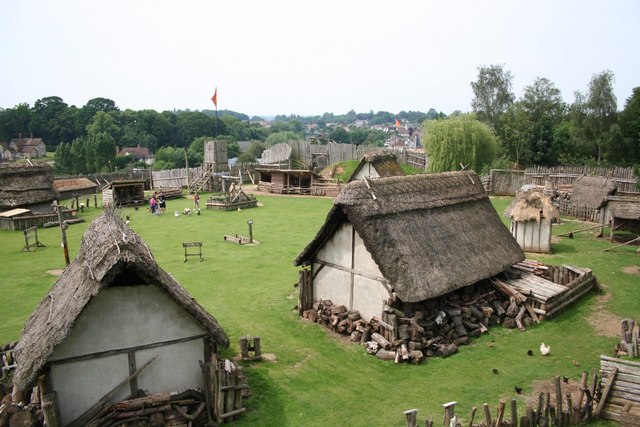
Craftsman's Reach is a wide region, but the center of its administrative power is the fortification on the banks of the Aelfwater called Tyreth Castle. The area was first settled by Yssan sorcerers, but the castle itself is built on Calanthean ruins. The Karharts have their origins in this region, and Tyreth is one of the few keeps sited on old defensible ground. The Lord Protector of the Reach resides there and the Order of the Forge Divine also maintains an outpost within the walls of Tyreth.
The town of Stock is some twelve miles east of Tyreth Castle, located where the Silverlode River joins Aelfwater Lake. Stock is a large town of some 2,000 people, and serves as the manor-center for the estates of Lord Varius Holmgrinn.
STOCK
Population: 2,200
Lord: Varius, Lord Holmgrinn of Kjellos
Stallir: Sieur Andrius Stockton
The trade in Stock comes primarily in the form of the Silverlode Mining Guild, a mining and silver-hauling concern which deals with ore coming down from Starkmine, Burret, and Solvirr. The Silverlode warehouses line the riverfront, and long pole-boats come down each day from the mines.
Stock is the center of Lord Holmgrinn's estates in the Reach, and services a number of small villages scattered in rills and dales surrounding it. The armored manor house overlooking Stock is inhabited by Sieur Andrius Stockton, Holmgrinn's stallir, or bailiff, in the region. Stockton is responsible for the incomes of the estate and the management of the manor.
The racial makeup of the town is weighted somewhat more in favor of men than in other parts of the Reach. However, a number of extremely large halfling and gnomish families do inhabit Stock, and indeed the rock gnome Lansar Koznei is one of the founding Masters of the Mining Guild. There is also a large minority of Iron and Green Dwarves who dwell along the outskirts of the town.
There are a number of amenities in Stock that are not to be found in other places in the Reach. A parchment workshop services both Tyreth Castle and the Mining Guild. A major tradesman's inn known as the Red Hart occupies a prominent position in the town's main market. Indeed, there is even a resident wizard in town, the former adventurer Thimbul the Sage.
The Silverlode Mining Guild
Masters: Lansar Koznei (male rock gnome), Jarring Alsongr (male iron dwarf), Lyda of Stock (female Thessalian), Murhenaur (female wind elf), and Olva Thoskri (female rock gnome)
The Mining Guild was formed ninety years ago with the discovery of silver in the Highstarks. Iron Dwarves from Mount Sirune left from the ringtown of Solvirr to search the high peaks, and eventually helped found what would become Starkmine.
The Mining Guild was put together not long thereafter. The mines in the Starks do not technically belong to Lord Holmgrinn, but the fact that the Guild headquarters is located in Stock and the silver flows through his manor means that he has effective control over the guild operations.
The Red Hart
Owner: Talleus Lackhand
The Red Hart is a large four-story inn with halfling and gnomish accommodations located on the north-east corner of the town market. Its taproom is large enough to fit a pie-powder court and it serves all comers. Talleus, also called the Lackhand and the Herald, was once a soldier in the service of Talleal; however, since losing his hand he has retired here to Stock.
Thimbul the Sage
An expert on nearly everything, Thimbul the Sage lives in a dwarf-built manor house on the southern outskirts of town, near the Akemite tombyard. He loves company, and can talk like a rock gnome.
Temple of Aros
This tholos is located on the riverside and overseen by Aelius Windspeaker, the high priest of the temple. Though it would otherwise be somewhat poor, it receives subsidies from elvish nobility on the far side of the river and thus is well-endowed with silver and artifacts.
The Drunken Ox
A large tavern located behind the wharves along the river, the Drunken Ox is a favorite of Mining Guild members and pole-boat sailors. It is owned by the Mining Guild, but run by Olga Helmsdottir, a blue dwarf.
The Temple of Law
The center of Hierian worship in the Reach, this temple serves as administrative hub and viator's waypost for messengers going to and from the Order of the Forge Divine and the Lord Protector of the Reach. The temple is overseen by the Hieros Lucan of Tyreth, an old priest who is blind in one eye and somewhat tight-fisted when it comes to temple properties and gifts.
Saimon Whitesmith
A goldsmith and silversmith family of gnomes, Saimon and his children live together and make a very good living crafting jewelry for the nobles of the Reach, as well as little trinkets for the gnomes, halflings, and even some of the dwarves who live nearby.
Akemite Monastery
This large moldering stone temple is a monastery devoted to Akem, and services the entire region with its wandering priests. All mortuary culture is focused on the monastery at Stock. Rare is it that the monks interact with the outside world, save to deal with the dead. The monastery was once the recipient of a great number of gifts and donations from the Reacher kingdoms, but in the last centuries there have been no gifts or bequests.
Grimbørn's Forge
The Grimbørn family of Iron Dwarves runs this weapon- and armor-crafting forge near the waters of Lake Aelfwater. Grimbørn arms are employed by most of the wealthy stallir and their men-at-arms as well as the Lord Protector and the Forge Divine.
NEARBY ADVENTURE SITES:
The Wind Temple - long abandoned, the Wind Temple was a consecrated elvish holy site. Its rambling ruins speak of the glory of Anuniä, the Wind Lord. Rumors persist that there are treasures still un-looted within its sacral depths.
The Tower of Ys - A tall, twining tower and broken complex of Yssan ruins about its base, this ancient Yssan construction was built during the dominion of Yer'is over Craftsman's Reach. Magical traps still hum and glow in the depths of the Tower; whoever built it, and why, is now lost to time.
Regar's Isle - A small island in the Aelfwater that once belonged to the wizard Regar. Now, overrun with lizard-folk, the island serves as a hideaway for bandits and outlaws. Many of the Mining Guild polebarges that go missing on their way to Tyreth have been waylaid and dragged off to Regar's Isle.
Wednesday, February 24, 2016
The Elves of Arunia
Since we've been talking about elves, here is how I attempted to integrate that strangeness of Celtic faerie folk with the playability of a PC race. The text is taken from my incomplete Book of Elves.


Introduction
Elves. The very word evokes the ancient kingdoms of magic and the white towers that rise up soaring against the sky. Fell-handed warriors and mages of old, and ancient dwellers in the northlands. Enemies of the goblins, the orcs, and the other Youngest Races that crawl or worm through the earth, the elves are nevertheless strange and mysterious to us. Sere and tall, distant and celestial, they are a race apart from Men and we may never understand them fully.
And yet; I served the Seastone Chair in Vesimä for many years as a genealogist and worked to uncover the lost histories of the elvish people for my patrons. In that time, I daresay I learned a good many things. Like my predecessor, Davon d’Arle, who wrote the inestimable volume, The Book of Dwarves, I have decided to collect here all of my knowledge of the elvish peoples and present it for future scholars to study.
Within these pages you will find the most detailed description of Elvish society ever attempted; with the eyes of an outsider, I have watched the elves from afar, and here I present to you my findings.
-Antomen syn Bokeva, Chief Scholar of Vesimä
Creation of the Elves
In the beginning there was the earth, the sky, and the water. Above it was Edellä, the land of the Gods, and below it was the Underworld, empty and dark. The World-Tree, which the elves call Asca and men called Irminsul, grew with roots long and deep and branches straight and slender. From its uppermost boughs there sprang a stream or a well (the anonymous ballad called the Maara Avenan speaks to this portion of the elvish creation myth) and from that well there was given to the Gods (the Elähon in modern elvish) the gift of immortal life.
Then there was great strife in Edellä between Noronë and Lumiä, the two most powerful of the Gods because he would not bend to her will and make the things she desired. Yet, in that time the other Gods made many things and chief amongst those for the elves were Anunë, Tulä, and Seniä. These three are the most worshiped Gods amongst all the pantheon (other than Noronë, but that is only because her cult is ascendant in Tailimisä). Seniä and Tulä made the trees and the grasses and the animals of the earth, and Seniä herself made the Dish of the Moon, which the elves favor far above the sun for its beauty. There is a common elvish saying that the sun blinds, but the moon embraces and they love the night-time and the silvery light.
Now, Anunë loved Tulä from afar during all this work; he saw, in the Dish of the Moon, a great beauty and he went to Seniä and asked her what it was made of. She told him that it was silver, a metal, made by Eirun the lord of earth. So Anunë spoke then to Eirun (who himself had designs on another God – see the Book of Dwarves, Chapter one) and was given the secret of silver. Then, he made a brooch of silver shaped like a leaf, for Tulä loved the growing things she’d made. He gave it to her, and they both wept with joy, for they were in love. The tears fell off the brooch and into the waters of life, and made their way down to the middle world, Arunë. And where they touched the dirt they sprang forth into the very first elves, silver of skin and brilliant of eyes.
These elves raised their voices in song to of their maker, Anunë Lord of Winds, and his wife, Tulä the Mistress of Spring and Summer. They dwelled in the North in peace until the coming of the orcs and the goblins and the other creatures made by the Mud Gods in the Third Age. They were led by a Hierophant (Gwydereon in modern elvish) named Imdré Who Strode. Imdré was the high priest of Anunë and in peace he led the elves to settle a kingdom in the North.
His sons were called Tursas and Sirion; Sirion was the first elf to die, even before his father, and it is also said amongst the elves that he was the very first poet. Tursas became Hierophant after his father, and was Hierophant still when the First Men came up from the south; but that is another story.
Subraces
Much like the other Created Races, the elves all spring from one common stock. The so-called “subraces” of elves that have evolved over the course of history all came from the people of Imdré the First in the Second Age. The elves were first divided by Imdré the Younger, also called the Betrayer, son of Tursas the Wise. In those days, orcs and goblins raided the kingdom of Tailimisiä and killed many fair elves; but when the First Men came up from the south, they made an alliance with the elves of the forest.
Together the first men and the elves went to war in what has become known as the War of the Chain, for at the very end of the war the elves chained Lumiä in the north, imprisoning him for many Ages to come as they believed (and to this day believe) him responsible for the deeds of the Youngest Races. Whether or not this is true, no one can now say.
But there were those elves, even in that time, that did not like men. Prince Imdré the Younger was amongst this group who, when the men and elves went to war together, harbored a deep hatred in his heart of this strange new people. For men brought with them the secrets of magic, and of building in stone and raising towers, and Tursas and many others were quite taken with these new things. But Imdré and many amongst the elves thought that they should hew to their own ways, and not trouble with men. When the War of the Chain was over, Imdré and many of his followers left the kingdom of Tailimisiä and forsook their kin – these became the Refusers. Those who did not wish violence upon men or their cousins yet still did not wish to dwell in stone houses followed another charismatic leader, the cleric Kivinë who worshiped the Moon, and they became the Wood Elves.
The final division amongst the elves, however, between the Wind and Silver elves, did not occur until much later. After the first men taught the elves the secret of magic, there were those who wished to devote themselves wholly to its perfection (and indeed, it is said that the elves have refined the art far beyond the measure of human talent) and a caste of scholars arose that lived in the land called Sylvasil; these were the Oronnos, who would become the Silver Elves of Oronë; they are not sundered from their kin, and still hold traffic with the Wind Elves.
Wind Elves
GAME STATISTICS: Wind elves retain most of the powers presented in the PHB. However, rather than receiving a +1 bonus to-hit for longswords and longbows, they may instead select a single sword of their choice (generally the scimitar) to receive a +1 bonus to-hit when using. In addition, they automatically learn every elvish dialect as part of their youthful training in the paidea.
The Wind Elves are those who hew to the decisions of Tarsus the Wise; they are those who learned to build towers and bridges from men, and also who learned magic. Like all things the elves set their hands to, the arts of architecture and magic have been improved a thousand-fold from the teachings they were given. Wind elves are generally quite lusty, moved by strong emotions from extreme to extreme. When a wind elf feels grief, it is often very sharp and near and he may be moved to compose a poem or write a song. Likewise, when a wind elf is angry the very sky may seem to darken at his rage.
The wind elves are a tall people, standing somewhat taller than their cousins of the wood, and on average as tall as (or slightly taller) than men. They have pale flesh, and their hair tends towards lighter colors: silvers, yellows, reds, and auburns. Male wind elves may grow beards sometime after their four-hundredth year, indicating great age and venerability. They are fond of instruments and song as well as history; elvish scholars have written the most comprehensive histories of the past ages, eclipsed only by Orvius Kavalson’s unfinished masterwork, the Grand History.
They are a fierce people when roused to anger, but generally wind elves are quite patient. While their emotions are quite strong, it takes a long while for them to shift from state to state; thus, wind elves may be prey to long periods of melancholy or unexplainable happiness. Their laughter rings like fountain-water and, while they may grow fat like any other race, their people have a tendency to thinness that is almost severe.
Wind elves are also fond of craftsmanship, mostly desirous of things that emulate natural beauty. Clasps fashioned like flowers, swords like curving blades of grass, shields like fallen leaves; all of these things are common amongst the wind elves. They have a great respect for the beauty of handcrafted materials though they often come to harsh words with dwarves, seeing the stark lines of dwarven handiwork as blunt and unlovely. Of course, this is not always the case, and many an elvish noble has patronized a dwarvish artisan in ages past.
Wind elves find the other strains of their race generally distasteful (save for the silver elves). They often view wood elves as uncivilized and barbaric and refusers as downright evil. They consider themselves alone to be “true” elves, even going so far as to exclude silver elves from that right.
Wind elves are quite proud of their culture, and all wind elves growing up anywhere are taught a strict corpus of material. This is known as the paidea, and many elvish scholars find employ teaching the children of noblemen the elvish classics. This (along with the Silver Road, which is described in further detail below in the section on elvish magics) is one of the reasons that the far-flung kingdoms of the wind elves in the north are all so culturally homogeneous. Indeed, the paidea is so important that noble-elves consider it their duty to have the lower classes educated as well, and even an elven farmer can recite the ancient poetry of Sirion.
The wind elves suffered greatly at the end of the Eighth Age from a disease called the Bleeding Plague which, though it struck all races, did not strike all equally. The wind elves were hurt the worst by it, and there was a great deal of violence and bloodshed due to the spread of the disease. The inheritance of that dark and anarchic period are the spell-wards placed along the borders of most wind elvish lands. These wards are designed to fool travelers and many men have sought out elvish kingdoms only to find themselves doubling back on paths they thought they’d crossed hours before; these wards confound and befuddle the unwary, keeping the elves safe. Of course, the wards must be periodically renewed, and in the Tenth Age they are only active in times of war. The other legacy of the Plague is the ruination of several elvish kingdoms and the absorption of many homeless and rootless wind elves into the wood elf population.
The wind elves are by far the most numerous of the elvish subraces, and they control the most important political structures of all the northern elves.
Silver Elves
GAME STATISTICS: While they retain the ability to sense secret doors and shrug off charm spells, Silver Elves get none of the other elvish benefits. Instead, whenever they cast wizard spells they calculate all effects as though they were one level higher.
When at last Aasentameri went to the Isle, she was succeeded by her own son as hierophant and lord, master of the devotions of Anune as well as lord over Ylvasmetsa. He was named Kivinen, which is the Stone, and strong as stone was he. It was in his rule that the power of Hierophant was challenged at last, in which Sidabrina broke free of the control of Ylvasmetsa. For the Oronnos of Sylvasil did not see in the house of Merivenye anything noble or strong — “They are sailors,” the Oronnos would say, “While we are the elder-wise, the magic-strong, the greatest of all the elves.” So war erupted in the Searing Hills and the Oronnos fielded armies of sorcery to claim the seat of the Hierophant. But in the end, Kivenen would not yield, and the Oronnos did not win the leadership of all Ylvasmetsa; instead, Kivenen gave them the authority to govern themselves, and ever after Sylvasil was not part of the Greatwood, but a kingdom of its own, with a mighty wizard-lord ruling from the tower of Nostorin.
That passage is from the Grand History and it describes the failed bid of the Oronnos to claim the throne of the Greatwood in the Third Age. The Oronnos became known as the silver elves who lived in the land of Sylvasil before its destruction. Today, the last silver elves live in Oronë, the islands on the Inner Sea. Many of them fled the fall of Sylvasil with the coming of the dragons (a topic much-discussed in elvish lore and the subject of the song known as the Ballad of Sylvasil Eldispellion) and escaped to the Oronëian isles.
Silver elves were always interested in the study of magic much more than their kin. While the wind elves do devote attention to it, it is but one of the many arts they treasure. For the silver elves, magical lore is the paramount knowledge, and all things pale before it. They are known as silver elves because they have not lost the silvery sheen to their skin that all elves were said to have, once upon a time, when they first emerged from the waters.
In addition to their silvery skin, these elves have eyes of strange and unsettling colors. Scholars have suggested it is their long study of magic which has affected them so, but it may be that the families of the Oronnos were prone to these traits before they became known as the silver elves. Amber, shining gray, deep reds, purple, and seastone green are all potential iris-colors. Their hair runs to darker colors than the wind elves; coppery colors, as though they were all made of metals.
Silver elves are extremely reclusive, even more so than the wind elves. They were not affected by the Bleeding Plague because they have placed a leaguer around Oronë forbidding any to land there without their permission. During the War of Necromancy in the Ninth Age it is said they repelled an invasion by the Necromancer and destroyed one of his gigantic and horrifying Death Titans. The skeletal remains of that giant can still be seen in the bay of the lead island of Oronë today, the tip of its helm and massive skull standing vigil just above the water.
The storehouses of lore and history in Oronë are rumored to be beyond compare, the most complete and best in all the world. Wizards clamor to journey to the silver islands, but only a scant few are chosen each year as worthy to spend time there. The silver isles have no Silver Road to link them with any other elvish land, and thus the silver elves have grown distant and estranged from their cousins the wind elves.
It is said that the silver elves are quite slow to laugh or smile, and that they speak in subdued tones. They wear shapeless unrevealing robes and garments of practical utility spun from Ralashar silks. They do not make music as the wind elves do, nor do they worship at evensong. The only music the silver elves truly enjoy is the sound of the chimes ringing over the islands when the wind blows, for there are hundreds of metal tubes that depend from the rooflines of the silver elvish libraries and lorehouses, each of which has a small clapper that allows it to ring in the breeze.
They have as little truck with outsiders as possible, and rarely (if ever) do they leave the silver isles. A restlessness may come upon a few in a century, but it is rare to see one abroad.
Wood Elves
GAME STATISTICS: Wood elves retain the normal benefits of elves presented in the PHB.
The wood elves are seen by many as reclusive barbarians. In some sense, this is true; wood elven society is semi-nomadic and organized in a tribal hierarchy. They generally are ruled by a charismatic leader (sometimes called a Warden). However, there is more to the wood elf than this.
They are shorter than their wind and silver elven kin, standing around five feet tall at the tallest. They are darker of skin – chestnut or mahogany. Their hair is generally black or brown as well, and their eyes range the darker gamut. Wood elves grow their facial hair earlier than wind or silver elves, tending towards long drooping mustaches or chin-beards, though the majority are cleanshaven. Wood elves differ in temperament from tribe to tribe, running the gamut from the friendly to the extremely xenophobic. No matter their disposition, however, wood elves cannot abide the exploitation of the natural environment. To this end they have a strong distaste for woodsmen and trappers who make a living off of the forests.
Wood elves are exceptionally keen of eye, and in addition to their famed bows they are also masters of poultices and herblore. Few wood elves become wizards, but those that do make excellent alchemists.
While some tribes wander within a certain area semiannually, there are also those that do not wander but rather live in a certain grove or clearing. Wood elves do stick to the forests, rarely venturing outside of them en mass. They share a belief in the sanctity and intelligence of all living things; they do not mine, nor do they cut down trees, but rather they trade with outsiders for their weapons, most frequently with superior-acting wind elf merchants. As such they tend to use wind elven weapons (though they do make their own leather armor).
Most wood elven settlements are situated around a central tree of great age; it is said that their elders can speak with trees and stones. In my experience, wood elves often have their homes built around particularly sleepy tree-ents. It is also possible that the presence of the wood elves awakens these trees; there are many legends among the elves of the wood about how their ancestors awoke the first treants in the early Third Age.
Since most wood elven societies do not have a learning of metalwork or mining, most wood elvish garments are made from local materials. Leathers and roughspun tunics are the norm. Wood elves also tend to worship Aloran and Senia rather than the other gods (who are more commonly worshiped by the wind and silver elves).
Refusers
The Refusers, the followers of Prince Imdre, are more like the wood elves than the other elf-kin, but still are quite different from all of them. They left the elvish homelands in the north and went to find a place where they could continue their lives as though men had never come from out of the southern jungles. In this Age, however, the Refusers are bandits, brigands, and pirates. They are reavers and murderers who see in all the other peoples of the north something to be exploited.
They have some physical similarities with their wind elf cousins, though they have long ago taken up the habit of extensive bodily modification-piercings and various “improvements” lend them a fearsome look on the battlefield. They are of middling height, as tall as men, and tend to have lighter hair colors. As a people they do not build cities or write histories. Rather, they have fortified encampments, and consider themselves to be always at war. The magics they developed they learned from dragons in the Fourth and Fifth Ages, and it is cruder and more violent than the sorceries known by the other races. However, wizards remain extremely rare amongst their ranks.
The reavers come on tides of darkness, and leave before sunup. They are notorious slavers, always seeking a profit from the suffering of the “lesser races”, and they have been known to sell slaves in the Free Cities or Essad, restraining their violence long enough to put to port and unload their cargo.
Little more can be said of this violent people, for they will suffer no outsiders among their ranks and would rather fight to the death than be captured.
Life as an Elf
Living within an elvish society is quite different from, say, living in the court at Miles. Elves do not stand on ceremony and are extremely free with their emotions. Those are the only constants amongst the various subraces of elf. The wind and wood elves share little more than that in lifestyle; having lived with both, I can make clear the variations between them.
Wind elves of all social classes have more leisure time than do men. The fields are blessed with the gifts of Tula, and they seem to blossom more freely in the elvish lands and yield more fruit. Likewise, skilled elvish hands can finish jobs much more quickly than mannish artisans. However, I believe the greatest difference between wind elf and mannish society is that all wind elves feel entitled to time of their own. This time is usually used singing or composing poetry, or even simply making things with their hands. Wind elves do not believe in sacrificing today for tomorrow, and as such will rarely work to exhaustion – a point of contention between elves and dwarves (or rock gnomes).
Calendrical and time-marking rites are also very important to the wind elves. Every night at dusk the clerics of Anune sing the Evensong; every week there is a minor marketing day and every month there is a major marketing day at a town center. These customs are as old as the elvish kingdoms themselves. Additionally, the wind elves celebrate twelve yearly festivals, one a month, each serving a different calendrical purpose.
These are: Whiteblossom (5th Thaw) which celebrates the returning of the trees and flowers and is dedicated to Tula, Woodharrow (8th Greening) which celebrates the return of Tula from the underworld, and Springsorrow(5th Sowing) which reminds the wind elves that all things must grow and change and die; Springsorrow is usually celebrated by the recitation of home-made poetry and is formally dedicated to Anunye. In summer there is theSummer-feast (15th Festing) which is also celebrated by men, the Field of Swords (15th Swording) in which martial prowess is honored, and the Lamp Festival (1st Furrow) to honor the passage of the sun’s longest hours. The Autumn rite of Fireleaves (22nd Hording) is a minor harvest festival with the major one, Harvestide (also known asLammastide and Barleywend by men) (10th Reaping) taking precedence in this season. Closing the autumn is theLonging Hour (12th Longing) which is a quiet and solemn occasion. The three winter rites are the Darkling (1st Darkling), Dwindling (1st Colding), and Weeping (1st Yearning) all of which honor the dead.
Silver elves hold no festivals or celebrations; they do not farm or do labor with their hands. Every silver elf who lives on Orone engages in the study of magic or history (or a similar scholarly pursuit). The merchants who supply food and other materials to the islands are contracted out by the silver elves; the only handiwork a silver elf will ever undertake is the repair or construction of one of the libraries or lorehouses. Silver elves barely sleep, even compared to other elves, and may spend days without it reading or lost walking in the past as described by some ancient tome.
Wood elves do not celebrate these rites, nor do they write or record anything. For a wood elf community, the primary means of remembrance is “speaking to the trees.” This is something done by wood elf priests, who claim to be able to understand the tongue of the stones and the trees and many other natural things. Day to day life for a wood elf revolves around hunting and trapping as well as long hours of manual labor: ropemaking, leatherworking, etc.
Elvish Religion
“The Font of joy is the bosom of the Maker. Silver blessings descend from the Lord of Winds, and all good things spring from him. Go forth, children of the Wind, and sing the song that gladdens.”
Song of the Four Winds, Anuneiän Holy Text, 3rd Age
Many believe that the wind elves are so-called because they revere the Anuniä, their creator, above all other gods. This is not strictly true, however. Wind elf religion is just as varied and strange as the religious amalgamations of the other races. What really defines the Wind Elf culture is that they have retained (or at least tried to retain) the ancient modes of worship and social structure of the old elvish thearchy of the Greatwood. The various elvish kingdoms of the north retain different elements from the ancient thearchy. Most of all, however, the elvish kingdoms of the north share a common cultural descendance.
In many of the northern kingdoms, Anuneiä is in fact the chief god. This is not true primarily in the powerful and ancient land of Tailimisä, which is ironic as it is the most direct descendant of the Greatwood civilization.
Worship in a wind elf context
The religious life an average wind elf differs greatly from the religious life of a common man living in the North. While most men (and many dwarves) do not interact with religion in a formal way on a set day-to-day basis, wind elven clerics sing daily prayers, the Intoners singing from the eight major Anuneiän texts of song. Yet many elves do not worship Anuniä as their prime god.
The other great competing wind elvish temple is that of Noronë which has faded in the past few hundred years. Noronën elves still attend the infrequent service of Anuniä, but Noronë demands a much different type of devotion. While Anuniën services consist of a series of Intoners singing the Eight Songs of Joy along with the congregation, Noronën worship takes place only once a month (like dwarvish devotion) on a day dedicated to the sun, at noon, whereas Anuniän worship generally is performed at dusk. Interestingly, this is what gives the time of day its name: Evensong.
While elves do not practice ancestor-veneration in the way the dwarves do, they do feel a strong connection to their past. This can be seen in the many statues and crypts of the dead that adorn wind elvish cities, oftentimes interspersed throughout the homes of the living.
Of course, there is an entire pantheon of gods that the wind elves worship; these include Tulä, Anunë, Calëron, and others. The physical temples of these deities vary greatly depending on the priorities of the relevant god. There is not space here to explore the attitudes of each nor to examine their cults in great detail. In brief, they are as follows:
Akanian, the Silent One. The cult of Akanian is small but important. They minister to the bereaved and deal with the bodies of the dead who have gone west. Akanian appears most often as a pale elf with a cloak and a high silver helm but it is said that he does not leave the place of the elven dead, the Isle in the West, where they ascend to Edellä.
Aloran, the Watcher.
Anunë, the Wind Lord.
Calëron, the Smith.
Kavalian, Lady of the Waters.
Lumiä, the Apostate.
Noronë, the Daystar.
Sarwé, the Weaver.
Seniä, the Green Mother.
Talifer, the Foolhardy.
Tulä, the Spring Maiden.
Of course, not included in this list are the three Shadow Gods: Fyrash, Runeiä, and Seäd. These are gods that the wind elves do not like to recognize publicly, as their worship is seen as something of a stain on the good name of the elvish communities. Be that as it may, worship of them is not quite outlawed and they have small but flourishing cults in most major wind elven lands.
Worship in a silver elf context
The silver elves maintain secretive Lumiän temples, which outsiders are generally not granted permission to participate in. There are four religiously dedicated lorehouses, which are like silver-elf noble families, though they are not related to birth but rather by adoption. These lorehouses each present a different branch of the Lumiän cult on the isles, and are described below.
Worship in a wood elf context
The wood elves do not worship in the same way that wind elves do. Their expressions of religious devotion are much more communal; rather than relying on the prayers of the cults, wood elves pray in large groups and aloud. Most wood elven communities worship a single god together while each individual elf therein may hold a personal, or patron, god. The most common community god of the wood elves is Aloran followed closely by Seniä.
As long as a wood elf joins in the public prayer ceremonies (usually held by a tribe chief, elder, or cleric) they are allowed to worship in private however they like. Organized cults within wood elven society are rare if not altogether unheard of. Those that have been introduced by the wind elves have very rarely taken hold. Rather, wood elves worship tribe by tribe and display curious few differences canon by canon; the wood elves hold that this is because the gods will not be gainsayed, and that, for example, each tribe who worships Aloran is inspired by that god to worship him in the correct way.
Worship in a refuser context
I truly cannot elaborate this section, as I have never been to a refuser settlement nor gotten close enough to a live refuser to question them. In the absence of other sources one can only speculate on how the refusers worship — undoubtedly, they have a priesthood and something resembling cults as such elves have been spotted aboard refuser ships or in raiding parties striking villages. Beyond that, there is nothing that can be said.
Noble Houses
Wind elf nobility
Wind elven society has been shaped by the great noble houses that rule their lands. The power of the noble houses is more absolute and secure in most wind elvish kingdoms than even those of Opria or Golnia. Complex politics dominate the lives of many of these houses, which own utterly massive estates. The first of those noble houses was the Imdrenen, scions of one of the first elves, Lord Imdré Who Strode.
Wind elvish noble houses are a curious thing; they are resilient enough to withstand the wearing of the centuries but it is also not unheard of for new ones to be created – much unlike the mannish nobility who must trace their descent back to some common ancestor to be afforded that title or else win in war. Yet it is one of the greatest powers of the elvish kings and thearchs to grant the titles of nobility to their servants and raise them to that status; perhaps this is due to the eventual decay of the great houses. New blood is often needed to invigorate them, and so many lands that have fallen into disuse are often made as gifts to loyal and close advisers.
There are no wind elf noble houses that span more than one kingdom or land, either; while such things may be true of the mannish nobility, particularly in the old lands of the Avarine Empires, the elves have developed strict laws preventing such things occurring, for such would be a power too great for any of the mighty elvish houses.
Due to the varying nature of each of the wind elf kingdoms, it is impossible to give a general overview of how these houses interact with the local power structures. The few things that can be said are that they are extremely wealthy and powerful and act as patrons for arts and more scholarly pursuits. Each of the great noble houses also holds sway over a great deal of land, administering it and overseeing the towns and cities within their domains. Yet, somehow, elvish common folk retain more rights than do any mannish ones; the smallfolk of the elvish lands are not bound to remain in one place (though they may be subject to their lord’s justice).
The following are titles used by the wind elves to designate their nobility:
Gwydereon – This title is reserved for the Hierophant of Tailimisia. It designates the priest-king of the elvish homeland. The current Hierophant is Kelatulë Elimä, the high priest of the Daystar.
Brenneon – This title designates an elvish king. The Brennan are rulers of the elvish kingdoms other than Tailimisia.
Tywys – A title reserved for the heir apparent of an elvish kingdom. The Tywys need not be from the same family as the local Brenneon if the nobles of the kingdom support an heir other than the one from the Brenneon’s house.
Tywyn – An elf lord, and head of a noble house. The feminine version of this title is Tywynne.
Glwys-lân – This title means “holy one” but is used for clerics of all kinds. The opposite title, anfad-lân, is used for a priest of an enemy; this means something like “unholy one.”
Tyr – This is the equivalent of the title "sieur" in Varan, and is used for Elvish knights.
Wind elf heraldry
Unlike mannish heraldry, wind elves tend to blazon extremely complex crests that are almost paintings. Male heraldry is displayed in a long circular oval and female heraldry in a lozenge-shape; these are much more elongated than the normal heraldic field of mannish lands and peoples mostly due to the fact that elves prefer longer shields that cover more of the overall body.
Silver elf nobility
The silver elves do not have a hereditary nobility; they all have grand stylings such as “Lord Magister” or “Prince,” which seems to depend on the position of that elf within the lorehouse that he is allied to. Indeed, instead of powerful noble families, the silver elves have a series of major Lore-houses which are non-kinship groups related to where that elf studied on the silver isles. These lorehouses exist in a state of competition with one another for resources, though Oronë is ruled by a joint council of all the loremasters of each library or house. There are six major silver elf lorehouses, being:
The Cove: The islands belonging to the Cove are some of the most hospitable in the inner sea. The cove controls shipyards and bays, and the small but potent fleet of the silver elves is under the command of Cove sailors. Generally, this fleet is hired out to the other lorehouses to go abroad and trade for books and other items of greater necessity. The Cove is one of the most important lorehouses on the isles.
The Deep Library: This lorehouse, also called simply the deep, commands a single large island in the center of the silver isles. It’s libraries are the most well-stocked and its scholars the most well-versed in arcane lores. The Deep wizards are known throughout the north as the greatest masters of magic ever to walk the earth.
The Rook: this lorehouse sits on a high spur of rock above the sea, and is one of the least powerful of the lorehouses politically, though it is said that the small library there is filled with strange and obscure lore unavailable anywhere else.
The Sapphire Tile: This lorehouse is one of the more important and powerful in the isles. So named because of the blue-plated roofs on that island, the House of the Sapphire (as it is commonly shortened) controls a vast number of libraries and small outlying islands and acts as the gateway to the rest of the isles. Foreign, non elvish, ships are only permitted to dock on the Sapphire Isles.
The Silver Chime: Responsible for the creation and maintenance of the silver chimes (as well as all other metalwork on the isles) this house is underestimated in importance, for the entirity of the isles requires the metal from the workshops here. The Silver Chime also houses libraries dedicated to metalcrafting lore as well as the history of dwarves.
The White Lamp: Serving as a lighthouse and beacon for the rest of the isles, the Island of the White Lamp bears a soaring tower with a sea-light perched at its peak. The White Lamp is a minor player amongst the politics of the isles.
There are also lorehouses devoted solely to the worship of Lumiä and the study of magic in his name: these arethe Jade, the Veridian, the Celadon, and the Emerald Lorehouses. These four make up a small archipelago of islands. Were it not for the cults that inhabit them, they would be relatively minor. As it is, they seem to have a say that is disproportionate to their stature within Oronë.
The Celadon Lorehouse: The cult of the Celadonian lorehouse studies astrology and divines the meaning of omens and signs. Celadon Seers are said to be gifted with portents of future-sight. They wear masks unique to their cult, which have brilliant silver markings around the eyes. The Celadon Lorehouse is also renowned for its observation dome, in which the loremasters calculate the passage of the stars.
The Emerald Lorehouse: The Emerald Lorehouse focuses on the properties of stones to produce magical effects. This makes the Emerald Loreseekers some of the most skilled magical jewelers in elfdom. Their workshops dominate the Lorehouse, the books of the Emerald Lorehouse being almost an afterthought.
The Jade Lorehouse: The Jade Lorehouse focuses on the harmonies of magic, and the path of tonal progression as it relates to the powers of magic. The Jade Lorehouse trains its Loreseekers in musical knowledge; some believe this is tied to the power the bardic college of the Spellsingers seems to share.
The Veridian Lorehouse: The Veridian Lorehouse focuses the attentions on of its cult on the study and control of magical power itself, as a latent energy that persists throughout the world. The Veridian is the youngest of the Lorehouses, boasting only several millenia after the Aellonian concept of the Dragon’s Breath became widely known.
Magic
Magic has been important to the elves since they first learned it from the men of the southlands in the Second Age. It has represented a defining factor of the silver and wind elves, as distinct from the refusers and even the wood elves (who, while they do have magic and study it do not do so in nearly as systematic or comprehensive a manner). Indeed, the love of magic has formed the core of many elvish societies, and it is present even today. We can see this in the legacy of the Silver Road which still functions even after thousands upon thousands of years, unmarred save by the hands of elves themselves when times were dangerous.
Elvish magic is strongly associated with mysticism and mystery and, while elves did not invent the notion of the secluded wizard, they certainly adopted it. Elven wizards tend to be more reclusive than the sometimes urbane mages that live amongst men. Rarely is an elvish mage found living in a city amongst other elves, but rather in towers adorned with gems and white and tall and thin.
The greatest achievement of elvish magic is the silver road, which links all elven communities of the north.
The Silver Road
Cultural homogeneity has always been one of the hallmarks of elvish lands. The great classics of elvish history are taught in much the same manner in Silversong forest as on the plains of Highstone. This is due to the ease of travel between elvish lands; the Silver Road is a network of wizard’s circles large enough to transport between 200 and 500 people at a time.
The physical manifestation of the Silver Road appears as a large circular area paved with flags set away from any major settlements (lest an invading army use it). The exterior flagstones are inscribed with sindabras-runes that give each circle a unique set of Mäidic names.
When a wizard stands in a Silver Circle and speaks the ancient (and secret) spells of transport, the entire circle springs to life, bringing all within to the named mate that the wizard calls upon.
Since the time of the Wars of Necromancy, the Silver Circles on the Oronëan isles have been completely effaced to prevent their use. However, there are still many operative silver circles in distant and ruined lands in which elves no longer dwell.
Wardstones
Another elvish creation, wardstones were first widely used during the anarchy of the bleeding plague. Many elvish kingdoms are surrounded by wardstones along their borders to prevent trespassers from finding their way within. These small and unassuming stone boundary-markers bear Mäidic inscriptions on them that, when active, confuses travelers. Anyone attempting to pass through a region where warding magic has been called upon will find themselves wandering in circles or lost in deep drifts of fog, eventually coming back to a place that leads away from the protected territory.
The creation of wardstones is a particular specialty of elvish abjurers who sometimes surround their own towers with such devices.
Kivenin
The kivenin, or elfstones, are enchanted gemstones that have been treated with some special words and methods to prepare them. While there are few kivenin that are not incorporated into some larger magical item, almost all enchanted things made by elvish wizards bear them. The favorite gemstones of the elves is sapphire and thus elves often bear sapphire inset armor or swords.
Kivenin can be enchanted in a dizzying variety of ways, from simple spells of light that make them glow (much like dwarf lanterns) to more arcane and dazzling effects. The particular powers of kivenin are hard to deduce, for their creation is complex and their use occult.
Immortality
Elven bodies, being originally made of silver and the very essence of life, do not decay or become corrupted as do the bodies of men. Neither does the union of soul and body become more tenuous as time goes on. For this reason, elves do not simply pass away. They may be killed by disease or in battle, but old age never takes them.
However, the elvish mind is not so immune. Immortal and changeless in a world where change is the only constant, elves are beset by the grief of witnessing transience. There is a great body of elvish elegiac poetry that deals with the mutability of the world and the ethereal nature of all things.
Elves possess the gift of separating their soul from their mortal body at will; they may leave their housing and journey into the west at any time they desire. This gift allows them to escape the grief of the world before it overcomes their reason and turns them into lunatics lost in the past, or worse.
It is a general rule that elves go west to the Isle of the Stair some time around their five hundreth year. In the early days of the world they were longer of life, and indeed some elves have lived for far more than five hundred years of this world. However, it seems to be an unwritten rule that the longer an elf waits to go west, the greater the chance of melancholic madness.
Worldview
The worldview of the Silver and Wind elves is somewhat similar, while that of Wood and Refusers are both widely divergent. Therefore, they shall be here dealt with in three groups. Silver and Wind elves both revel in their years, as well as fear the passage of time as it eventually erodes all of their works. With lifespans as long as they are and generally introspective culture, the wind and silver elves tend towards melancholia or extreme fiery passion-they are poor at maintaining a balance between their emotions. Young elves generally experience life with more of the fire in them, while older elves live tinged with sadness.
Wind elves see the world as a place to live in, but also a place against which they are set in opposition. The world is impermanent and while the greatest of elvish philosophers may have been able to reconcile themselves with the changeable nature of reality, most elves fight against this fact throughout their lives, attempting to establish things of ethereal permanency; Wind elves see the most permanent of all things not as stone or blade or conquest, but rather in creations of beauty which can live on by experience through their children. This has led the two most valued things in elvish society to be art and history, which both may remain long after the towers and walls have crumbled. Silver elves have much the same attitude, though they seek to study magic instead. Through their continuing mastery of the arcane arts, they may aspire to create a semi-permanency.
Of course, that is not to say that individuals and sometimes whole societies do not strive against the changeable nature of the world. It is not uncommon for a noble family to enact powerful magics on the tombs of their ancestors or their own houses in order to preserve them against the ravages of time. While other races may seek immortal life, elves already have this blessing (and curse). Instead, they seek not to preserve themselves, but rather to preserve their works and their surroundings.
As far as Wood Elves are concerned, they have managed to retain a much different attitude about the mutable nature of the world. They are unconcerned with things such as politics and permanency. Instead, they live to see things change and grow, to blossom and then in their time die. Wind and silver elves may see this view as perverse or counter to natural urges of preservation, but wood elves will say that they simply echo the very heart of nature itself, Anunë.
Wood elves worship the earth itself, and frequently their priests, generally of the Druidic Order speak with the very trees and stones. To the Dosä, the land is itself a person, as are each of the plants that grow and the rocks that sit in the earth. They are very attached to the regions in which they live, though that is not to say that Wood Elves never travel. New lands have new characters and many elves journey to see and experience the great variety of the world.
Refusers cannot be classified with their other elvish cousins. In their eyes, the world has shut them out and exists only as a treasure-trove for them to raid and take slaves. They tend to live on small islands are in unexplored coastal lands, assaulting the peoples around them but tending towards primarily human targets.
Crafts
Craftsmanship is an important part of elvish culture. Calëron the Smith is also known as the Craftsman, and artisans are given great honor in elvish societies. The Wind Elves dedicated themselves to various crafts, producing master-artisans who can challenge even the fine work of the dwarves. Dedication to a craft is considered to be a noble pursuit, and the elvish kings (the Brenneon) as well as noble lords (Tywen) sponsor many hundreds of artists and craftsmen each, giving them ample free time to create what they will. Elvish artwork is introspective and thoughtful. All crafts are considered an extension of artwork; this means that even the most modest of elvish blade has a fine balance and is forged to look at least somewhat like something else. Elves are fond of blades that look like leaves or blades of grass. Shields are fashioned after leaves as well, and
Wood elves, however, have few craftsmen and make little in the ways of crafts. Metalworkers are rare amongst them, and mines even rarer (nearly nonexistent). Wind elves often trade with the wood elves, selling them weapons and other goods in exchange for herb, wood, and the various alchemical substances wood elves brew. The crafts wood elves DO practice include carving (bone, wood, and other substances), herb lore and the arts of poison, and leather-making. Some tribes do practice basic stonework to make statues, but they never use it to build homes.
Refusers build ships and make cruel barbed weapons, but I have never seen a Refuser craft that was not meant to injure or kill.
Poetry
Wind elvish poetry descends from the Anunëian poetry known as the Eight Songs of Joy. These have provided the template for poems and poetry since the beginning of elvish history. Poetry comprises a significant portion of elvish time and effort; most wind elves write poetry at some point in their lives with their free time. However, most elves who write poetry do it purely for themselves or a circle of their friends. They generally do not share it with the world. This is because songmakers, historians, playwrights, and poets of all kinds are some of the most revered members of elvish society.
Music and poetry are integral to all aspects of elvish life. The nobility often have various petty players to entertain them, and most occasions of any numbers whatsoever are accompanied by musicians or poets. However, these are only the petty harpists and lyre-players of Elvenkind. Those who aspire to write histories (many of which are set to music or are meant to be read accompanied by music) or compose songs and poems of new and lasting potency are generally highly regarded and sometimes even granted nobility for their efforts.
Poetry and music are also woven throughout elvish history–the art of spell-singing, codified and mastered by the Spellsingers of Iiriem, is an ancient elvish practice. When man first taught them magic, it was Feanwé who learned it. However, over the long years he taught the art to those who would become the Oronnos as well as the master-singers and the harpists of his home, who had learned their art from the giants.
Thus, bardic magics have been passed down from the earliest of elvish times. This tendency has spilled over into human cultures as well, which produced the bardic schools and colleges as well as the notion of the wandering troubadour, learned in magic as well as song. For more on elvish spellsinging, see the Spellsinger Kit presented below.
Return to the table of contents.
Architecture
Wind and Silver elves share many architectural elements in their cities. They differentiated many centuries ago, however, and silver elvish buildings have followed a different evolution of forms. While wind elves prefer slender buildings with open awnings and porticos, the silver tend towards long low buildings with overhanging eaves in the style of silver elvish libraries, taking the place of most of the tower buildings that wind elves prefer (though there are undoubtedly some silver elven towers, particularly where the islands require lighthouses to ward off ships).
Of course, not every wind elvish building is a tower or adorned with towers. But those which are not, tend to follow the pattern of wide eaves and slender archways. Indeed, some scholars have suggested that the wind elvish style of building is descended from the Milean villas found on the southern coasts of the Trade Sea. Of course, it has since deviated considerably from that form. Wind elves prefer to build with colored stone (or, in many places, with heavy red brick and then sheath those structures in tinted marbles). A recent architectural innovation has adorned buildings built within the last seventy years with external hooks so that lanterns may depend from them, shedding light on the inner courtyards and streets of elvish cities.
Noble holdings are, of course, the ultimate expression of elvish architecture. Elves have different ideas of land-use than men, of course; they do not attempt to pack many people into a single area, but rather they allow their towns and cities to meander almost like pleasure-gardens over vast spaces. If this is true of elvish cities, then the lands of a noble house are a microcosm of their urban centers. Noble houses may own many hundreds of acres of land, buildings scattered throughout. When a house is in its upswing or Yncodi, all of those buildings spread over the region will be in good repair. However, during a noble house’s Sy’ndod (or falling period) some or all of those buildings will be in poor repair or even in full collapse.
Wind elves also tend to embellish their architecture with natural forms. Minor architectural details are sometimes fashioned like leaves, ivy, or animals. The most renowned architects in the wind elvish nations have also, in recent centuries (particularly since the elvish renaissance) designed buildings which are cunningly rendered after a natural creation; for example, a large manor designed in form and function as a flower with wings like petals spreading out from its center.
Elves and the Sea
Elves have had a relationship with the sea since before the coming of Man. In the dark days of Lord Imdre Gwydereon (the Elder, not the Betrayer), when the north was ravaged by the spawn of the Felnumen, the elves inhabited the forest of Ylvasmetsa, which became known in later years as the Greatwood and its companion-land, Sylvasil.
The first elvish settlements were by the sea, in fact. The cities in Vesmia and Tailimisia on the water are built upon the oldest resting-places of the elves before they knew how to hew stone or build towers. Sidabrinia and Vesimia are what remain of the two great deepwater kingdoms of the elves; Elvish sailors long ago explored the coasts of Arune from the ports in those two lands.
While not all elves are enamoured of the sea, those who are have become consumate sailors and explorers. In the early ages, elves founded colonies far and wide from those deepwater kingdoms. During the elvish renaissance of the Ninth Age they resumed those colonizing activies as their people were in a resurgence. However, with the coming of the Bleeding Plague and the devastation of the elvish populations, the shipyards once again fell silent.
It is only now, over five hundred years after the sword-stroke of the plague smote elvendom, that the Moon Fleet of Vesimia and the Cloud Fleet of Sidabrinia have begun to sail far abroad to strange lands again. It is said that elvish mariners have seen places the likes of which most men cannot imagine-far Mughar, Diaojiong, and the dark side of the world.
Elves at War
Wind elvish nations do not go to war in feudal levies as the Milean nations of the north do. Rather, elvish noble houses support standing forces that are supported as private militias. Elvish armies are composed of specially provided warrior-nobles; elvish armies are, in this sense, made up entirely of what a Milean would recognize as knights. However, these militias are necessarily small. They are supplemented in times of great strife by drafting up members of the noble’s household. It is for this reason that wind elves are all trained in the use of a sword (generally a scimitar). They are required to fill out the ranks of noble households. During times of war, each noble offers up command of their own house to their Brenneon.
Elvish knights are not all mounted warriors. Some are swordsmen, others train with polearms. Mounted elvish warriors prefer the use of the longspear to the mannish lance. Elves generally wear chain mail or scale mail; only the most highly trained of elvish warriors ever wears plate mail due to the restrictions it presents in mobility. Elvish fighting forces are generally quite fleet of foot, and tend to move with extreme rapidness. Wind elves have long since developed a fighting style based on the way they fought in the wood. That is, elvish forces tend to strike quickly and melt into the surrounding countryside to resupply and strike again. Two elvish armies fighting is more similar to vipers dueling or men in a knife-fight than to iron-clad knights charging into each other.
While elvish armies do indeed engage in large-scale battles, the maneuvering between them is almost as important (if not, perhaps, more so). Feinting and repositioning is an integral part of elvish tactics, both wind and wood. Great wind elf generals will sight their enemy many times before finally choosing to make a decisive engagement.
Elvish Cities
Cities of the wind elves (the only elves who truly build cities) are quite different from those of men or dwarves. They do not pack their populations into small areas and build layer upon layer up like the Mileans or down like the dwarves. Instead, wind elves build their cities over many miles. They have very little civic planning other than that the old center of the city is generally the location of the settlement’s important temples upon an open green. However, most of an elvish city can be considered a “green,” as they incorporate large stretches of meadow or flowering field into the same places where they raise their buildings.
Tombs, as well, can be found interspersed throughout dwellings for elves take great pains to bury their dead and remember their ancestors in elegant architecture. Wide boulevards generally provide the traffic of the city with easy-to-traverse paths, but the smaller lanes of elvish towns tend to meander this way and that. Walking through a city of elves is somewhat similar, in a sense, to walking through a garden.
Of course, older elvish cities are less open than those formed in later ages. The capitals of the ancient kingdoms, for example, exhibit much less free space than places that were founded later. As time goes on, the green spaces shrink under the weight of tall elvish towers and courtyard-homes. Yet, there is a certain amount of free space that elves will not live without. Even the most ancient cities would rather spread than completely cover the land.
Character Creation
Elf Kits
Bladedancer
(warrior kit)
Bladedancers represent a special group of elves who train with bladed weapons. While all elves (as a timeless race) can achieve amazing heights of prowess with their swords, an elvish Bladedancer dedicates a good portion of their live to meditating on the various “stances” of the blade. These elves eschew armor and prefer to let their weapons do the work of defending them.
Requirements: Dex 17, Wis 12
Weapon Proficiencies: Any bladed weapon, most often scimitar and/or bladed polearms. Bladedancers avoid ranged weapons. Bladedancers may specialize in their primary weapon just as a non-kitted fighter may.
Bonus NWPs: One-weapon fighting style, tumbling.
Recommended NWPs:
Special Benefits: Bladedancers are able to engage in a complicated series of pre-planned maneuvers known as stances which they train for days and link together during battle. The higher their concentration, the faster they move and the more dangerous their battle-tactics. This reflects itself in an increasing bonus to-hit and damage as they fight. For every round a bladedancer is not hit in combat his focus increases, granting a 1 to-hit bonus and a +.5 damage bonus (thus, every two rounds, the damage bonus increases). These bonuses may reach a maximum of +5/3 respectively.
In the third round of the trance, the dancer’s weapon speed decreases by 1 point. In the fifth round, this increases to 2 points, giving a scimitar a speed of 4 in the hands of a fully concentrating bladedancer.
If the bladedancer is struck, his concentration is shattered and he must begin anew.
Special Hinderances: Bladedancers may not perform this ability while wearing any type of armor, and for this reason they do not spend time learning how to properly move in armor of any kind. In addition, they will never use ranged weapons nor can they use blunt weapons with any level of skill.
Wealth Options: A bladedancer starts with 5d4x10gp as per a warrior.
Subscribe to:
Posts (Atom)