The Ussuran Orthodox Church traditionally fills the role of both the Greek Orthodox Church and the Russian Orthodox Church in 7th Sea. But, thanks to its devotion to only the first of the Four Prophets, I have taken the liberty of expanding the Ussuran faith to cover an analog of Judaism within the other nations of Theah. This requires a little balancing, and of course some trust in the players that this isn't intended to be an anti-Semitic slur, but rather to bring some extra life and complexity to the setting. As I've expressed before, 7th Sea is great... but its too simple a world when compared with the 16th, 17th, or 18th centuries its supposed to represent.
Communities of Ussurans
As written, Ussurans rarely leave Ussura because they believe Matushka, a religious figure and also a folk-spirit or magician, protects them there. But in order for Ussurans to mimic Jews in Theah, they must have communities scattered throughout the Théan countryside. There are, therefore, two types of Ussuran Orthodox communities in Théah: native and transplanted communities.
Native communities sprang into being with the coming of the Second Prophet. They rejected the Second Prophet as false, wherever they were. These were Théans of other ethnic descent than Ussuran. However, as time went on these small sects were herded together and denounced by the Vaticine Church. They found comfort in the Ussuran Patriarch, who took them in and pronounced all the Rejectionist Sects to be under the guidance and influence of Matushka and the Ussuran Orthodox Church. Centuries of persecution were ended as a formal church claimed these disparate sects. Priests were dispatched from Ussura. Old Teodoran was taught in these communities and they are now more or less indistinguishable from the transplanted communities.
The transplanted truly came from Ussura. Whether at the whim of an ancient Gaius, or because there was a time of strife or famine, these Ussurans left the Mother Country. Some where ordered to, so that they might build trade posts at the terminus of Ussuran rivers. As the Renaissance progressed, more moved into Vodacce to head trading companies connected with the amber, jet, and fur trade of their homeland.
Both types of communities are bi-lingual, with transplanted communities tending to be tri-lingual: Ussuran, the native tongue in the land of their exile, and Teodoran being the three languages spoken. In most Théan countries, Ussurans are required to live in particularly marked out quarters or districts. Avalon expelled its Ussurans, and so did, at one point in the Middle Ages, the country that would become Montaigne. Ussurans abroad tend to be legalistic, paternalistic, and highly socially stratified. They sing dirges of longing for the homeland, which is holy, but know that they may not return until the Matushka calls all of the True Faith back. Rather, many make pilgrimages to Ussura to step upon the sacred earth.
They are often permitted certain liberties by the Théan monarchs: they may practice their religion in peace, even where Objectionism or Vaticineism is hated. They may wear their hats indoors and in courthouses, and are not subject to the traditional "hat honour" of Théah. They are permitted to give loans and mortgages, and to charge interest on both. But they are also required to wear clothing which identifies them as ethnically Ussuran, and marriage between a Ussuran Orthodox and a local comes at a hefty tax to the lord.
Still, they thrive as many communities might, and the Ussuran Orthodox banks of Vodacce are known as some of the best and most secure, because you can take a loan from a Ussuran on the banks of the Arnot and claim it in cash in the Ussuran Quarter of Kirk several months later.

Ruminations on fiction, roleplaying, and assorted irritants.
Showing posts with label 7th Sea. Show all posts
Showing posts with label 7th Sea. Show all posts
Friday, August 5, 2016

Tuesday, August 2, 2016
7th Sea Cities: The Sirine Republic
Population: 190,000
Ruler: The Sirine Curia (under Principe Marco Vestini)
Guards: The Curial Regiment, the Vestini Family Arms
The city of Sirine is divided into several major quarters. These are the Canal Quarter, the Ussuran Quarter, the Palace Quarter, the Curial Quarter, the Numan Quarter, the Banking Quarter, the Forge Quarter, and the University Quarter. It occupies a prime position along the coast of Vaticine Bay, protected by storms and possessing a huge deepwater harbor that is warded by arms of headland. Its anchorage was expanded by the digging of the Canal Quarter near the shore, allowing ships to reach deep into Sirine's heart. It is the seat of Vestini power, and boasts some of the finest craftsmen and tradesmen of Theah.
The Canal Quarter.
Networks of canals, all surrounding the Grand Canal artery, make their way inland, shadowing the banks of the River Arnot. The Sirine Bridge, a massive unadorned brick structure, overlooks the Grand Canal. Merchants gather there to bid on trade goods sailing into the city each day. On the south bank of the Grand Canal, the houses are stone and marble. On the north bank, they are brick and clay. Beyond the canal and the river Arnot, stands the Forge District. Touching it on all sides is the great Banking Quarter.
The Ussuran Quarter.
Surrounded by a brick wall with several gates (which must be shut at sundown), the Ussuran Quarter is the largest congregation of Ussuran Orthodox outside of the mother country. Originally founded by Ussurans coming to trade with the wider world, they have remained a germ of banking and merchanting since the early middle ages. The quarter is frequented by footpads because of its narrow and confusing streets.
The Palace Quarter.
The finest quarter of the city, this is that which surrounds the Palazzo Principe. Only nobility may hold townhouses here, and there is an opera house and theater which are both frequented by the Vestini well-to-do.
The Curial Quarter.
Surrounding the curial palace, which is singled out by its massive brick tower and astrological clock which faces four sides of that tower, the curial quarter is the heart of Sirine government. Most merchantile families have their holdings here.
The Numan Quarter.
Between the Palazzo Principe and the wall, there stands a stretch of abandoned Numan ruins that was once a bath house and fortress. These swarm with members of the Black Market, thieves guilds, and brigands.
The Banking Quarter.
The great Vestini banks, while they do not rival those of the other Vodacce princes, are all gathered here. The Banking Quarter is centered on a high hill that stands apart from the rest of the city. The Vodacce banks are all built with marble, stained glass, and vaulting.
The Forge Quarter.
Brick houses and craftsmen's shops make up the entire Forge Quarter, where there are cheap taverns and lodgings. The finest crafts in Theah come from this place, made of material from the Crescent Empire or Cathay.
The University Quarter.
Wednesday, July 6, 2016
Play Report: Red Robes
The Vesten watched from atop the crest of the hill. Behind him, the big Ussuran was muttering and kicking stones at the feet of the church. But the Vesten was watching for movement on the horizon. The town of Almiera was nestled at the foot of the dusty cliffs, a tightly-packed village center, clustered about the well and the chief households. The bowl of the valley spread away in three directions: waving fields of late-summer wheat. Beyond them where the broken hills of western Castille. If he squinted just right, the Vesten could even make out the gleaming city of Salamancar in the distance.
His real target was the road. A winding track from the seaside city, it led by back league and mile to the Crescentgate. The powder train had come up that road. Now, it was a smoldering wreck of charred wood and corpses. He closed his eyes and probed the wound in his chest with his fingers. Grumfather's balls, that hurt! The little Vodacce scholar may have removed the musket ball, but the wound was still fresh and throbbing with pain. Not one of them had come out of that fight unscathed.
The first they heard of the town of Almiera was back in Salamancar. One morning, they all tumbled downstairs to breakfast in the King's Arms to find a stranger in their dining room. A heavyset man with a black mantle cape and a black patch over one eye. He spoke Montaigne to Beatrix, but with an accent out of Avalon. "That sword," he told her, gesturing to the famous Aquilard. "You'll have to give it to me. You know who sent me." When she refused, the Avalonian shrugged. He had men with him, but they left when he did. He warned her that he would find her again, and the sword would go back to its rightful owner.
It was Dottore Luigi who brought them to the cathedral that morning. "Bishop Carillo has told me that he has work for us; but he will not put anything in writing. We must see him, if we wish to find out more about it."
So they did. The cathedral, up on the hill overlooking the harbor, was gothic in its design, a throwback to the Castillian middle ages. Its interior was dark and grim—shafts of brilliant colored light shone through the stained glass, incising sharp cuts into pools of shadow. The hymns of the canons gave the place a sacral air.
They were led to the bishop's office, an octagonal room bedecked with signs of scholarship and learning: books all in Old Théan, a sextant, globe, and spyglass, and even an old Crescent astrolabe. "You are not the kind of people who wish to see the Inquisition gain more power. This I know." The bishop's words were Vodacce, but translated to Vendel for the benefit of all gathered by Luigi Vasso. "I know this because you asked after the fate of the captain in the ship you brought here. You were concerned. This touches me.
"I wish to know if you would strike a blow against Cardinal Verdugo and his lackeys." With the others giving a grumbling sort of assent, the bishop went on. "Good. As you may know, the Universidad San Cristobal was closed several months ago. The Inquisition shuttered it and demanded no further research take place. With the Hierophant missing or dead, there is no one who can gainsay Verdugo." The bishop shook his head.
"Amongst those men at the Universidad, there was one by the name of Profesor Alónso. He was a scholar in Syrneth lore and history. He had a site, not far from Salamancar, at which he was digging. There is an old Crescent mosque that was converted to a church after the Reconquista. Beneath it, lies a Syrenth tomb. Well, two weeks ago, Inquisitors arrested his diggers and sent them to work on El Murro, the Black Fortress."
"What do you want us to do? Rescue him from an Inquisition dungeon?" asked Signore Fortunato.
"No," said the bishop. "He is here. Hidden in this very church. My knights have kept him safe. But the ship you brought to harbor—the Wanderer... it has brought enough powder to this city that the Inquisition's loyal man, Padre Javier, has been able to requisition it from the army. He finally has the forces to do what he has wanted to do ever since he put Alónso in his sights."
"Destroy the patrimony of the Syrneth," grumbled the Ussuran. "Something which is, by right, the inheritance of all mankind."
"So you see my problem. I need you to escort Alónso out of Castille to safety... and to humiliate Javier, prevent his powder from destroying the ruin. If he is sufficiently humbled, he will not have the power to requisition such supplies from General Montoya again."
It was decided. They met the Profesor, who told them of his time in the ruins, his discovery of a Syrneth machine designed to look like a human hand, but all of red metal. He showed it to them: fused to the stump of his left arm, where a Syrne trap had scythed his flesh away. And he told them the name of the town: Almiera.
Before they left, the bishop took Brother Iakov aside. "I only now realized who you are, and I must warn you. You have an enemy back home who has whispered poison into every ear he can reach. I, and every bishop in Théah, have received letters warning of a dangerous heretic fleeing from justice. I wanted to tell you that my name can save you from the Inquisition... but only in this city. Outside Salamancar, I have no power."
Before they left, the bishop took Brother Iakov aside. "I only now realized who you are, and I must warn you. You have an enemy back home who has whispered poison into every ear he can reach. I, and every bishop in Théah, have received letters warning of a dangerous heretic fleeing from justice. I wanted to tell you that my name can save you from the Inquisition... but only in this city. Outside Salamancar, I have no power."
The next day found them out at Almiera, planning an ambush for the wagon-caravan of powder coming from Salamancar. But before they could set their trap in the hills west of town, a familiar face reappeared. The man who had troubled Beatrix the day before, and his eight thugs, were coming up the trail. They learned his name from the innkeep, or rather his title amongst the Castillians: La Espina Noir, the Blackburr.
As he approached on horseback, Beatrix dismounted. Signore Fortunato shouted a challenge to duel in Vendel, but the man did not reply.
Beatrix drew the Aquilard. "I challenge you," she said coldly.
With a laugh, the big man dismounted and threw aside his hat. He drew his sword and main-gauche. "You will regret it. I will take that sword with me to Montaigne."
"If you do," she sneered, "It will be in your belly."
They saluted one another, as swordsmen do. Then, he lunged. At once she was on the defensive. Theus, he was fast! Fortunato fingered his weapons, and Sven drew his axe. The moment she staggered, they were ready to intervene. The Blackburr's epée drew blood, then sliced the buttons from Beatrix's cuff. He smiled cruelly.
Beatrix dared a few experimental strokes, but the Blackburr beat them away. She withdrew; she waited. She parried a thrust, and then a cut. Then, with a quick one-two, she made her counterthrust: deep into the Blackburr's chest. He grunted, but still he came on. He sliced open her coat and cut along the side of her belly.
In response, she opened another pin-prick in his side. His shirt was now soaked with blood. "Damn," he hissed. "Take her!"
Brother Iakov, ever ready, hurled his great battle axe at the man. The Blackburr fell into the dust, shrieking and clutching at the huge handle. His men were swiftly dispatched, and he himself given bandages to staunch the flow of blood from the wound. They were all bound and carried out of sight.
When the caravan came around the bend, Brother Iakov and Beatrix were hidden behind a nearer hill, Sven and Fortunato behind a farther. Three wagons came trundling down the road, each driven by a white-coated man of the Castillian army. At the head of the column there rode a Vodacce captain in white with a long cloak of red. Near its rear there rode a woman in white with a musket across her lap. Both wore tricorns frilled with fancy Castillian brass and silver. Marching alongside the caravan were fifteen young noblemen, each in a different shade of fine red garb.
The Fortunate Ones stepped from their hiding places. An axe flew; a musket cracked. Beatrix fired her pistol at the horseman. But none were prepared for Sven—for he drew, with a peace of soft chalk, upon his long-hafted Vesten waraxe, an ancient sign, a rune of the Laerdom. With that gesture, the might of the Old Gods spoke. A stroke of lightning tore through the air, sizzling as it went. It touched a powder keg.
All at once, the three wagons were an inferno of hellish fire. Smoke rolled up like the breath of Legion. There was an almighty thunder, and everyone was thrown clear of the wagons. The drivers died instantly, along with their horses. The men marching on either side were hurled to their feet. The captain and his lieutenant were both blasted from their mounts: both horses were scorched by the fire. The men lining the march were tossed into the brush, and even the Fortunate Ones were left with their ears ringing, their feet slipping from under them, and their sight turning white.
When they came to, they joined the fray. A CRACK! from the woman-lieutenants musket brought Sven low. She dropped it and drew a pistol, slamming a ball into Fortunato's side. The captain hewed a heavy cut at Beatrix, his falchion slicing her coat in twain and biting into her hip. Iakov rushed the him and struck him in the face with the butt off his axe, shattering his nose. As he staggered, spitting blood, Beatrix feinted left, then lunged right, running him through. Fortunato struck the woman in the temple with his hilt.
Before long, the others surrendered. They were gathered together, their breeches sliced to reveal the flesh of their bottoms, and warm pine-tar was poured over them, compounded with bagfuls of feathers.
Beatrix let the Blackburr go after the soldiers departed, walking, in shame to Salamancar. He was deprived of his weapons and his money, and released into the hills. The captain and his lieutenant were sent off to El Murro to report on their failure, be stripped of their rank, and make what little they could of the rest of their lives.
And now, the big Vesten Sven watched. In case someone came riding out of Salamancar looking for the men (and woman) who had bloodied the nose of the Inquisition.
Monday, June 20, 2016
Friends and Enemies: Alyssa la Coste Ariette du Martise
Alyssa la Coste Ariette du Martise is the only daughter of the famed swordsman and fencing master, Seigneur François la Coste Ariette du Martise. His manor in Echine overlooking the city and the sea was famed, in his youth, as a place to learn the intricacies of the Valroux school. Hoping to pass on his mastery of the blade to his daughter, he spent many hours with young Alyssa to instill in her a love of the noble art.
In 1649 the Seigneur's steward, Tomis LaMarche, hired a new chef for the manor kitchen: a young woman named Martín, who brought with her her daughter Beatrix. Hoping that she would find a friend in young Beatrix, François brought the child into the main house and placed her in Alyssa's fencing lessons. Though young Alyssa enjoyed her fencing-master no better, she did grow to befriend young Beatrix.
Alyssa's friendship with the serving girl grew every day. Eventually, she demanded her father place Beatrix in her dancing classes and accompany her on her outing in the city. Indeed, when Martín died, the Seigneur all but adopted Beatrix into his family. She was as a sister to Alyssa, though the divide between them was impossible to bridge—Beatrix was the daughter of a disgraced farmer, and Alyssa of one of the luminaries of the school of Valroux.
Beatrix continued to study the blade long after Alyssa dropped her studies in fencing. She pushed herself to excel, impressing even the Seigneur. Eventually, François himself replaced the fencing master and teach the girl himself. Meanwhile, with Alyssa and Beatrix growing older, they started to visit salons and sneak from the manor at night to cut a red swathe across the city.
One evening, Alyssa decided to taunt a particularly hot-headed young knight at a salon in the city. He grew angrier and angrier as Alyssa and Beatrix made a mockery of his skills at the blade and pistol. Before the night was over, the Chevalier Launairre challenged Alyssa to a duel. "If you're father is such a swordsman, let's see what he taught his daughter!" He assumed Alyssa would decline and stain François' name. But she accepted the challenge, expecting to lose honorably.
Beatrix jumped in front of her and accepted the challenge in her stead. Her years of training with Maître François enabled her to dispatch the chevalier handily. From that day forth, Alyssa's mood with her faux-sister began to sour. She realized that her father saw in Beatrix more of an heir than in herself. As the years went on, Beatrix was given her own quarters near to François' own. He treated her more and more as his natural daughter, and clothed her in the finest of clothes.
When Lord Ariette du Martise died, he left his most valuable possession to Beatrix—the blade Aquiliarde, a puzzle sword produced by one of the last remaining Maîtres. When Alyssa realized what her father had done, she went to Beatrix and asked for the sword. Beatrix refused; Alyssa had never cared for fencing, or the art of Valroux.
When all the accounts were settled, it became clear that the Ariette du Martise estate was nearly depleted. The only item of value left was the Aquiliarde, which Alyssa desperately needed to sell to secure loans to recover her father's wealth. Beatrix, furious at what she saw a disgrace against the old lord's memory, once again refused her.
Since that day, Alyssa has turned all her venom and vengeance against Beatrix, even to the point of forcing her out of the country after having turned the very law of Montaigne against her. The one thing she wants back is the Aquiliarde. For her, it is the crystallization of all her father's disappointment and misplaced love.
Now, Alyssa has married the wealthy and indolent Marquis Aramert Cologne du Martise. Though her coffers are restored, she still seeks Beatrix... and her father's prized blade.
Tuesday, June 14, 2016
Backstories: Herr Barabus Bütschwil
High in the Ahlsberg hills there stands a lonesome manor house and the ruined hamlet that once supported it. This is Bütschwil, home of Herr Bütschwil, a knight-errant suffering under a horrific curse. Ahlsberg has been blighted by the War of the Cross—a Free City of the Empire, devoutly loyal to Imperator Reifenstahl and the Holy Republic, it suffered more than anywhere else throughout the war as one of the most critical points to move troops into the southern reaches of the Holy Eisen Republic. It was filled with loyal knights and pledged its taxes directly to the Imperator each year for support of the war effort. Today, it stands a ghostly shell of its former self.
Herr Bütschwil was said to be one of those knights. He fought on the walls of Ahlsberg against the 1663 siege of the city, repelling a Sieger siege tower with his bare hands. However, the infamous Objectionist champion Ritter Karla Hansbach struck him down from the wall with her pike, sending him nearly to his death; he tumbled into the moat of Ahlsberg, and the weight of his dracheneisen armor nearly pulled him to the bottom. When he emerged, it was a haunted man, driven to ever more desperate acts.
It was on the streets of occupied Ahlsberg that Herr Bütschwil encountered the curse that would dominate his life and spell the ruin of Bütschwil Manor. Among the waisen wandering forlornly in the streets, Bütschwil encountered a wizened old priest in Objectionist colors. He attacked this chaplain on sight, little realizing that the city was already under Objectionist rule. The old man died beneath his blade, but cursed the knight with his final words: "May Theus take from you all that you are, and hold it in his hand, until the day you realize the gravity of your sin!"
From that day forward, the orchards of Bütschwil produced only rot. Its people were cursed as lepers. The Ritter himself found that all of his glorious past was forgotten—literally. The priest's curse has left him senseless and without comprehension of anything that occurred before the Siege of Ahlsberg. He remembers only his ignominious defeat, the burning drive to prove himself better than his fall from the wall, and the slaying of the nameless chaplain... which has damned him so.
Monday, June 13, 2016
Friends and Enemies: Archimandrite Danil Palomnik
DANIL PALOMNIK
The venerable Danil the Pilgrim was made archimandrite of the Monastery of the Sacred Transfiguration in 1664. His appointment by the Metropolitan was the final blow in the career of schimonk Iakov Gagarin Alekseyevich, a notoriously difficult to deal with monk with an independent turn of mind.
Danil is an old man with a long history in the Orthodox Church. He was raised on a backwoods farm where he taught himself both Old Théan and Old Church Teodoran from the books his father occasionally purchased at market. Danil is known to be an exceptionally holy man, so devoted to the teachings of the Prophet that when his father was slaughtered by bandits, he did not raise a hand against them in anger. He was a captive of a band of Fhideli murderers for six years where he served as a sort of priest and confessor. When he finally escaped, he was taken in by the Church and began his long and storied career.
The latter half of his life was spent in the Monastery of the Sacred Transfiguration, and much of that was spent engaged in a particularly obscure war of theology with Iakov Alekseyevich. Both men of humble beginnings, Alekseyevich's insistence on the correct doctrinal readings of old holy texts drove Danil to fury. Danil felt that Alekseyevich, some thirty-five or so years his junior, should at least conduct himself with the basic tenets of respect. Alekseyevich, however, published his correspondences by reading them out loud at chapter meetings. Eventually, Danil cursed Alekseyevich in public and took an oath of silence until the man should be expelled from the monastery.
When the old abbot died, Iakov Alekseyevich put himself forward as a candidate. Supporting his candidacy was the abbey's cellarer, Dmitry Vasileyevich, a noble bastard from the city. By blasting his opponents as heretics, misguided, or downright unbelievers, the two men paved a way for Iakov to claim the abbacy. He won the election, and waited to be confirmed by the Metropolitan.
Danil Palomnik, unable to stomach the thought of serving the loud-mouthed Alekseyevich, had written several scathing letters to the Metropolitan before the election. When he arrived, rather than approving the results of the brothers' election, he named Danil Palomnik the abbey's archimandrate, stating reasons of "desperate measures to be taken against enemies of the Faith."
Archimandrite Palomnik responded by immediately punishing Iakov and Dmitry, removing them from positions of authority in the abbey and reducing their rank to that of mere novices. Iakov, unable to stomach this insult, began to preach against the archimandrite to the abbey's local clients—farmers, knights, anyone he could reach.
Late one evening, Dmitry was warned that the two monks were to be stripped of their station in the morning, made defrocked priests, and turned over to the Stelets for punishment as agitators against the state. They fled in the darkness, preferring the ignominy of escaping to the west than to the death-by-torture that awaited them at the hands of the Gaius' troops.
Friday, June 10, 2016
Friends and Enemies: Dottore Luigi Vasso and the Carlo Estates
Doctor Luigi Vasso
The learnéd Luigi Vasso is a canon lawyer and a doctor of the church who has served Cardinal Ernesto Denzelli de Bernoulli at the various church Conclaves throughout his life. He was also appointed tutor to the young Fortunato Ernesto di Carlo. He grew up in Numa and was admitted to an order of monks in that city in his early life. He befriended the former cardinal Giovanni Orsini (who was in line to become the Vaticine Hierophant, with a plan to return the seat of the church to Numa all in place when he died), who sent him to be trained at the cathedral school of Numa. After the death of his patron, Luigi became the professional scribe and lawyer of the newly-appointed Enersto de Bernoulli and took up a position training the young Fortunato in the Vodacce countryside.
Luigi Vasso is a slight man, standing only 5'4". He was born in 1609 and is in his 59th year. He wears the black and white robes of a Vatacine priest and the pinched glasses of a man who has struggled overlong at the reading of small text. He usually has fingerless gloves to keep his hands warm but leave them free for writing. He is always seen carrying a leather satchel filled with inks, pens, and parchments.
Father Vasso has greying hair and goes clean-shaven. His one true love in life is a fine port and some time at the end of an evening to read a book before the sun sets. He is never more content than when in Vodacce, and never more harried than when forced to be on the road. He has a deep reverence for books, libraries, and learning, and has tried throughout his whole life to impart that love (unsuccessfully) on his ward, Fortunato.
The Carlo Estates
In the central regions of the Vodacce peninsula, some 45 miles from the great city of Numa, there lies the estate known as Carlaterre. Eisen barbarians once settled this region as Numan soldiers and its name comes from an Old Eisen word meaning man (cearl). The sleepy hamlets of the region eventually give way to the di Carlo manor and its estates where Fortunato grew up to manhood. It is not far from the land of the Orenza, just over the next rise.
Upon the old half-forested estate there stands a crumbling stone manor of ancient provenance. Still mired in the ancient structure of the middle ages, the di Carlo have made minor updates to it, but it never entered the great golden renaissance of the rest of Vodacce. A single tenant farmer named Alfonzo and his family till the soil beyond the park.
There are five servants in the house—the seneschal and major-domo, decrepit Augustino, the stablegirl Olivia, and a handful of domestics who keep the manor up. Rare has been the day that Fortunato has returned to this slumbering place, preferring instead to have Augustino forward the receipts to him wherever he is staying.
Thursday, June 9, 2016
Friends and Enemies: Baldassar Orenza
In the marshy and malarial lowlands of Vodacce, where the ancient city of Numa still stands and waits for the Princes to meet in its hallowed ruin to speak of peace, and of Vodacce power, there are two rival families, both alike in dignity, who have hated each other since the time of Emperor Corantine. For the Orenza and the di Carlo families, the past is very much the present.
The origins of the feud are lost in the distant past, but it seems to have been a matter of horseflesh: the Orenza patriarch, a minor noble in service to the Caligari, sold to his neighbor the Barone Theodoro a sorrel roan. That horse threw the baron's son, killing him. The baron had the horse killed and demanded restitution from Patricius Orenza, who denied him. To this day, the families remember their dislike.
However, this feud is like many of those that brew on the Vodacce mainland. That is, every Vodacce nobleman can recount a reason to despise any other. However, in recent years it has come to the forefront again in the figures of Signore Fortunato and Signore Baldassar.
Baldassar Orenza
Once a dashing and handsome young man, Baldassar Orenza and Fortunato di Carlo where unusually close for members of dynasties that found each other distasteful. While Fortunato's father, Signore Domenigo, spent most of his time on the islands attempting to improve his fortune, his mother, the Signora Lucretia, stayed on the estate. There she formed a long-time friendship with Guiducci Orenza. During their childhood, Fortunato and Baldassar were boon companions, only banished to their own houses when Signore Domenigo returned.
However, a long-lasting rivalry developed between the two boys. Baldassar was taught hard work and study, and has spent his life adhering to that rule. He worked on Syrneth digging expeditions when he was a young man, spent years building up his shipping companies (by proxy of course, no self-respecting Vodacce would engage in work), and managing his father's fortune. He is a devoted child of the Numan philosopher Cicerus and a rather staid man. His popularity is moderate, but his influence is something slightly more.
At each turn, Fortunato seemed to be given opportunity. Where Baldassar struggled and strove to better himself, Fortunato never cared much—and yet, was betrothed to a Fate Witch, and, in his usual way, vanished to go "make himself a fortune" in the north. Baldassar's despite of his one-time friend has only grown over the years.
The Barone Orenza was once slender and handsome, but is now somewhat heavyset. He wears his dark hair clipped short, and his beard well-trimmed, and is fond of red and dark purple. It is said that he drinks too much, but only when he has no work to do. Like everything else in his life, Baldassar Orenza has studied very hard at swordwork, and is a passable fencer of the Bernoulli school. He has also come into possession of a number of strange Syrneth artifacts, and has a network of merchants and informers throughout southern Theah. His one drive is to show up his childhood friend-turned-rival, Fortunato Ernesto di Carlo.
Wednesday, June 8, 2016
Friends and Enemies: Solmünd Morgenkraii
So, I've gotten back into 7th Sea with an in-person group. While I eagerly await the coming of the second edition (with its New World, Sarmatian Commonwealth, etc.) I figured I'd give a little writeup of some of the folks who are going to be making appearances in this game.
Firstly, let us begin with the most interesting characters: enemies.
Solmünd Morgenkraii
Like many wealthy Vendel merchants, the Morgenkraii created a crest to wear and display prominently on their seat in the Leaguehall. Solmünd is known as the Morning Raven, and lauded as a fierce opponent of piracy and a strong arm of the Merchant's Guild in the League. His family were originally furriers from Oddiswulf, but he himself became a well-known scribe and eventually bought his way into the Merchant's Guild.
In 1660, Solmünd got himself appointed to an admiralty to rid the Vendel waters of the rampant piracy that plagued her ships. From Eisen raiders to Vesten jarls, Solmünd promised to sweep the waters of Vendel clean. A particular focus was the island of Soroya, long known for playing host to Vesten fleets of longships. After spending half a year gathering intelligence, Solmünd decided to act.
He borrowed a huge sum from the League treasury and spread word that the League had just completed a massive purchase from Queen Elaine of Avalon. Six ships were laden with gold and treasure. Solmünd publicized the notion that the fleet was a symbol of national pride, having broadsides printed throughout the islands. "With this, we purchase a navy of unstoppable power!" Then, he let slip through back channels that, due to a personal conflict with Lord Mayor Thørginn Auskrai of Kirk he was unable to fully man the ships and that half of the cannon on board were mockups of wood to deter pirates.
It's true that the ships were poorly manned, and undergunned. With this in mind, he sailed them through the Soroya waters. When the Vesten raiders, unable to pass up such a prize, captured the Fury of Oddiswulf, the Hope of the League, and Theus' Bounty, they discovered untold wealth aboard. They also discovered a huge supply of Eisen liquor. In the village of Finnsulf, there was much drinking that night.
In the early watches of the morning, the Vesten bloated with their victory, Solmünd Morgenkraii's true fleet encircled Finnsulf. His men shipped to shore, cutting off all the roads out of the town. The first the Vesten ever knew of his presence was the opening salvo of the ship's cannon from half the League fleet.
Morgenkraii saw every man, woman, and child in Finnsulf put to the torch, the cannon, or the sword that day. He recovered the Vendel treasury, and let his actions stand as a lesson to the Vesten; 15 jarls were slain.
Morgenkraii is said to be a deadly shot with a pistol and a genius when it comes to logistics and tactics. He has flaxen blond hair, but dark eyes tending toward a storm-wracked gray. He wears the traditional black and white of the devout Objectionist members of the League and always carries four flintlocks on his person—two at his left hip, and two more on a leather bandolier.
Tuesday, February 25, 2014
7th Sea: A Tactical Study of El Morro
or: Why is that fortress so damn important?
This is something I've mused over for many hours. The 7th Sea books can be amazingly detailed and they can also be hopelessly vague. The question here is this one: With two hundred miles of Rio del Delia, why is Montaigne so focused on capturing El Morro, and why does it serve as the lynchpin of the western Aldana defense? As presented, there are no answers. All it takes is a few moments looking at the map of Théah to realize the Montaigne should just go around the great fortress and either cut its causeways from behind, or simply bypass it and stretch their supply lines to capture San Cristobal where they would be able to, at once, begin reinforcing their army by sea and thus take Vaticine City without worrying about the forces at the Black Fortress.
Here, then, are a number of reasons why El Morro is the most important fortress in Castille and the Montaigne may not easily abandon its investment:
1) Attempting to cross El Rio del Delia would leave San Tropal exposed. The city of San Tropal, at least the way I have set things up, lies about a quarter or half mile from El Morro. If the Montaigne forces left in Castille (which are less than robust after the withdrawal of Montegu) were to attempt to forge another crossing, the garrison at El Morro would easily overrun San Tropal and its guardian fortress, thus pushing back the Montaigne conquest. Since a Castillian army in Torres would inspire insurrection and untold sorrows, the Montaigne cannot afford to take this risk.
2) The process of fording del Delia would take too long. By the time the Montaigne Armée Soleil had arrived at the location they were going to make the crossing and prepared to cross in force, a Castillian army would be ready to meet them. Well-supplied from its unbroken line to El Morro, this army would hold defensive territory while the Montaigne attempted to fight over a river, possibly in small rowing boats, large barges, or upon a hastily constructed pontoon bridge.
3) As long as El Morro stands, the river is in Castillian hands. Though Montaigne sea-power might be mighty, they have no riverine vessels capable of contesting the Castillian navy that regularly sails up the Delia. They cannot bring their navy to bear along the rivers due to their prohibitive width, thus meaning that whoever controls the most powerful fortress along del Delia's banks may also move ships with impunity. These Castillian naval vessels could easily sever contact from an army that crossed to the far side or, worse, destroy the army while it was crossing.
4) The garrison of El Morro can speedily redeploy. This is related to numbers 1 and 2 but is more applicable as a general rule. Once the investiture of El Morro ceases, its defenders are free to reposition anywhere they want to face the Montaigne army. As long as San Tropal continues making at least a showing of assaulting the fortress, they are trapped where they are.
Monday, February 17, 2014
More 7th Sea: The Pazo
As I was planning some stuff in Castille (the common language of the PCs and the nationality of one and a fourth of them), I realized that I really had no idea what Spanish manor houses look like aside from what I've gathered thinking about ranchos in California. That's not really how I like to go about things, so I started to do a little research.
 The manor houses of Galicia are known as "pazos," a cognate with palace. I can't find a lot of information about them online, but it's clear they share some elements with the English manorhouse of the 17th-18th centuries though they appear to be much more formidable in terms of defense.


The actual historical analogues of Castille are Galicia, Leon, Navarra, and (surprise!) Castile. Like all else in the 7th Sea world, the history of Spain has been simplified to reduce the hideous complexity of the past. I've yet to find any good maps of the layout of the pazos.
This brings me to a second point about 7th Sea—namely, a lot of information is missing from the books. For example, I've never seen a list of prices for cargo anywhere, nor for the food required to feed crew members on a ship. The governments of the various nations and their nobility are only vaguely elaborated even in the kingdom sourcebooks. It's unclear whether or not the Castillian title "Don," for instance, refers only to the governors of the huge Ranchos or to all landed nobility—or indeed if there even are lesser nobility in that sense, as the Castille sourcebook refers to gubenadores and caballeros but never any mention of those running individual towns and estates.
I've simply decided to call them "Don" as well.
Wednesday, February 12, 2014
Command and Control
Adventure stories don't have random encounters. What? Yes, you heard right. Anything anyone sees in a novel is specifically shaped to give some impression, to build story, or to reveal elements of character. Nothing can be random, because everything is planned by the author. The same goes for 7th Sea—there is no system in place for random encounters. When the GM feels like there should be an encounter, there is one. When the GM needs an encounter to happen, it does. This is a fantastic opportunity to slip into the dreaded illusionism that has been so well illuminated by the OSR for indeed, the method of fiat encounter and "story development" runs the risks of utterly destroying the all-important freedom of choice of the player. What, then, is a good GM to do?
The easiest way is to just force random encounters into the 7th Sea system. For many reasons, this is a sub-optimal solution. Firstly, 7th Sea does not operate with the assumption that there will be random encounters and has no reward for fighting (other than survival). Additionally, encounters are unlikely to drain resources the way they do in D&D because of the nature of swashbuckling. The best use for random encounter tables would be for "flavor" encounters of the kinds that display illuminating scenes. I admit that I have used flavor encounter tables (for things like occupied Castille; do the players stumble across, say, a work-gang of Montaigne deserters being forced to build revetments?) and even this seems slightly at odds with the intentions of the game.
There are things to look out for when deciding, fiat-like, on what things players should encounter:
Nonresponsiveness. Once you know the encounter is going to happen, make sure you give the players the opportunity to ride around it, choose a different route, etc. Do not, for example, force the players to encounter Jean-Luc le Fevre on the road to El Morro if they were going to encounter him in San Cristobal but they avoided the inn where he was staying. This helps preserve the meaning behind player choices. Nonresposiveness also includes not altering the set-up of an encounter to anticipate player disposition or action—but if you have a Villain there, feel free to spend two drama dice of your own to allow them to anticipate players...
Thematic encounters. Encounters should not only be obstacles (the group of Montaigne soldiers on the road that ask for your papers) but also thematic (the Castillian priest being executed for speaking against sorcery) so they help flesh out the world. Whether the PCs involve themselves or not in these encounters, they will help build the "feel" of Théah.
Appropriate encounters. Even if you are going to wing an encounter (and why not, in the absence of formal encounter charts?) they need to be appropriate. If the Heroes are lying low in a cellar in the Vodacce countryside, it's not very nice (and it destroys the fact that they made this choice) to simply have searchers stumble upon them. At the very least there should be some roles that make it more or less likely they do (maybe a wits check with a TN) or the required expenditure of a drama die on the GMs part to let the Villain or Henchman leading them decide to go down there.
Choices, choices. The most important part, of course, is that the players are left some options when an encounter occurs—they should be able to see the encounter coming in many cases, making decisions on how they want to approach handling it, that sort of thing.
When you aren't letting the dice soak up some of the arbitrary nature of GMing as one does when using encounter tables, one needs to be extra careful not to tread on player's autonomy.
Monday, February 10, 2014
7th Sea: News of Rogné
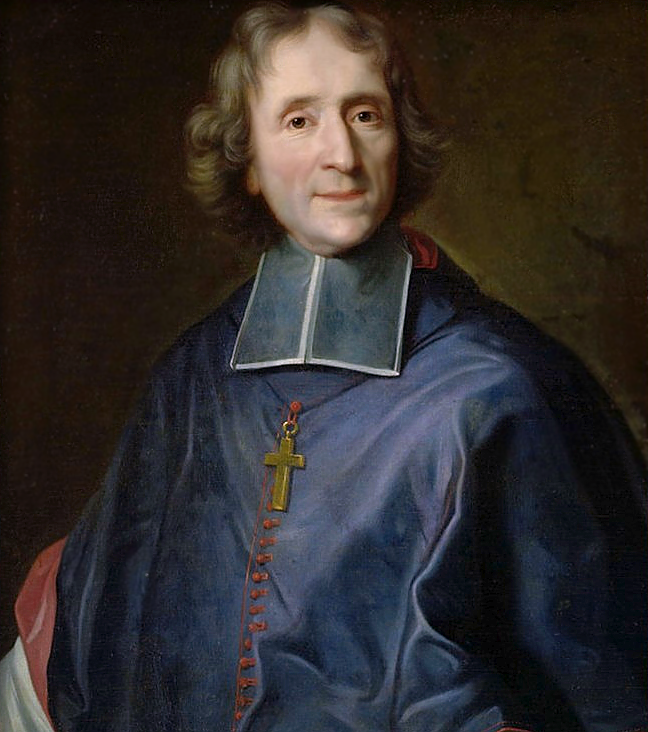
Gracier Levenche Colmar Torraine, the Archbishop of Buché, was placed under arrest on
Primus Second of this year following an investigation spearheaded by Tibault d’Allais, Captain of the city’s Musketeers. The archbishop has been accused of treason and is being held in the Forteresse Buchaine under the watchful eye of the Duchess’ men in Buché.
Almost immediately following his arrest, the cathedral was shuttered and masses discontinued there. The Gnostic brothers attached in the cathedral school were prohibited from teaching and their workshops were shut down. Rumors began to circulate that the secret papers Gracier intended to disseminate had yet to be found.
On Terdi the 4th of Primus the musketeers were alerted to a disturbance at the White Boar tavern. Following up, Capitaine Tibault discovered one of the cathedral’s monseigneurs who was holed up with a number of mercenaries in a closed church in the slums of the city. After a brutal battle in which Tibault’s men were badly wounded, the Capitaine arranged for a negotiated retreat to preserve the lives of his musketeers.
The priest, who was later identified as Dominique, escaped musketeer custody and assaulted a number of the Duchesses guard at the cathedral. Another scuffle at the eastern gate left one of the Buché guard capitaine’s dead. They are believed to have been spirited from the city with the aid of local peasantry. The Duchess responded at once by announcing that all prelates within the province would be subject to search and required to carry papers issued by their archpriests or bishops.
Intendent Adelina Arsembaut has issued similar orders in the neighboring provinces and a full-scale hunt for the spies is underway. They are said to be dressed as Gnostic monks or peasants and are heading for the Castillian border. Rumors to the contrary, they have yet to be apprehended and no priests have been hanged.
Thursday, February 6, 2014
To the Pain
NO.
7th Sea is about the story, not about the world or your place in it (like D&D). The story ends when characters die, and that's why it's very hard for characters to die in 7th Sea. However, the story does not end when they are maimed physically or emotionally, when they lose everything they love, or when they, in other words, fail. The wages of failure are no longer death, for 7th Sea takes the long view of story. It's not a meat grinder in which characters are chewed up and spit out. That doesn't mean losing has no sting, it just has a different sort of sting. 7th Sea explicitly exists to make fantasy Musketeer tales, to create the kinds of stories that Dumas would be proud of. Thus, the game is played not to the death but to the pain. When a character finally does die, the moment must have meaning—for this is a narrative game, and nothing occurs in narratives without meaning something because someone has purposefully put it there.
And you can like both styles of play, clearly, since I do, without suffering some kind of mental lapse. I just hate it when my 7th Sea gets into my D&D.
Wednesday, February 5, 2014
Complicating the 7th Sea: Objectionist Sects
There is only one movement of Objectionism in the 7th Sea main rulebook or in the Eisen book (where one would logically expect to find the religion expanded). Since we're complicating Théah, let's go ahead and add back in a bunch of sects, make it a little spicier.
Amboisnots—the Reformed Church of Montaigne, Amboisnots are a Magisterial Objection sect found in Montaigne. Since the first reforms of Lieberism, the Montaignians have been struggling to find a way to cope with Amboisnots; the Edict of Chartrouse in 1610 declared Objectionism legal in Montaigne and recognized members of the Amboisnot Church as citizens of the kingdom. This was in the wake of the Tumult of Hugo, a plot conducted by Hugo du Toraine in an attempt to wrest control of the Montaigne government from the Church of the Prophets by kidnapping the young king.
Lieberism—the "main" branch of the Objection movement, Lieberism follows the teachings of Matthias Lieber and grew from his objections to the Vaticine order. Whenever "normal" Objectionists are mentioned in a 7th Sea product (as opposed to Church of Avalon folk) they are Liebers.
Hyperianism—An extreme (l'objectionist extreme) sect, Hyperianism grew from the split between Andreas Hyperius and Matthais Lieber over the divinity of the Prophets and their physical presence in the world. Hyperianism emphasizes both the Theology of the Will (voluntary union of Theus and Man) as well as the State of Predestination (all those who will be saved are predetermined to be saved). Hyperianism is primarily to be found in Northern Eisen and parts of Vendel.
Rededicants—A primarily peasant sect, very popular amongst the Eisen peasantry and parts of northern Vodacce, Rededicants believe that they must be figuratively reborn into a community of the faithful. Persecuted by both the Vaticine as well as the Magisterial Objectionists (such as Liebers), the rededicant theology focuses on mystic revelation and the ability of the individual to tap into the power of Theus and receive insight. Communities without traditional marriage or other social ties feature prominently in Rededicant faith—as does the denial of the material world as evil. This has prompted the Vaticines to label the Rededicants "Manikees," a sect that was suppressed in southern Montaigne and northern Vodacce during the Middle Ages.
Tuesday, February 4, 2014
The Broad Brush
I've been poking around at 7th Sea again as my Space 1889 game, my Spelljammer game, and my central 10th Age games have failed to resume. That's all well and good, but coming back to 7th Sea after a long absence (particularly after reading a HUGE amount of historical fiction set in the 17th, 18th, and 18th centuries) has highlighted for me exactly how broad of a brush AEG used when creating the game. Not that this is a bad thing! Simple is good, when it comes to history religions for games, because otherwise players have to struggle with it. It also reduces the amount of work required to get the game out the door, the amount of work required for the GM to run it, etc.
That being said, historical fiction rides on detail. All novels of historical fiction are crammed with niggling little details to help bring the reader into the period. Thus, the loss of a number of European nations, the extreme simplification of Protestantism and its myriad sects into a single Objectionist movement, the reduction of England to some weird Elizabethan-period thing without recourse to, say, the Restoration or the more complex Parliamentary system after the Wars of the Three Kingdoms, and that extreme truncation of the continents to exclude most of Africa and Asia, might be a bit TOO simple.
I've always felt the map of Théah was... unpleasant looking. There are apparently people on the internet who agree with me, since I discovered this little gem:

Of course, there are myriad problems with this much more european map; the Montaigne invasion of Castille would look a lot different, for one, and the southern half of Vodacce isn't just a smattering of islands as once it were. However, with some adjustment (oh yes, and I suppose some additional lore for the new nations presented here) I think this would actually greatly improve the 7th Sea experience. BUT that would be a huge undertaking—so instead I am going to stick with the original map of Théah:

I don't know if the existence of Africa was ever addressed in any of the modules, but I intend to add it in, possibly obscured by Syrneth or other pre-human artifice. Cathay and the Crescent Moon I will simply note as being IMPROPERLY MAPPED by Théans, since they cannot really explore those regions due to Church interdiction and the Corridors of Flame.
As for sects and religion, that is easy to solve—I'll make up a number of Protestant (erm, OBJECTIONIST) sects to fill in the gaps. Yes, there are a number of countries missing in Théah, reducing the overall complexity of the world... but are there? Perhaps they have simply been swallowed up by personal unions and the expansion of boundaries here. Yes, I think with some minor tweaking, 7th Sea could make a very well detailed alternative history game indeed.
And this is the problem I have with the Broad Brush. I can only play broad-brushed settings for so long before I begin to feel this nagging doubt at the back of my mind. "It doesn't feel real," it murmurs to me. "There's something wrong. It's not... complicated enough." And that's when I start doing insane things like this.
Subscribe to:
Posts (Atom)