Vale Farmer
Warrior Kit
Description: Young Valeland farmers seek out adventure at a higher rate than in any other land, probably because all Valelanders have freehold farms that are beholden to no lord. Generally, these young folk are the second or third children in their family, though it is possible for a first child to leave home behind. They are uniformly young and naive, having spent their upbringings on a rural homestead.
Weapon Proficiencies: The following weapons are available to Vale Farmers at creation: short bow, long bow, quarterstaff, club, sickle, flail, knife, dagger, spear, short sword, trident, net, billhook. After level one, they may learn any weapon they like. They cannot begin play with a weapon specialization, though they may pick one the next time they have a weapon proficiency to spend.
NWPs: Farmers get animal handling, farming, and cooking for free.
Equipment: Farmers begin play with two weapons of their choice, studded leather armor, and 1d4x10 Dorlish readers or Teralian hands to spend. They also begin play with two weeks of rations, two full wineskins, a bed roll, and a tent.
Special Benefits: Farm-born characters should determine the location of their family farm in the Vales. They can always receive food and lodging there unless they do something to break their connection with the family (or the farm is destroyed). They may inherit the family farm, but it is more likely that, upon gaining level 3, they will receive an audience with the Vale governor, granting them permission to found a farm of their own within the Vale.
Further, these solid salt-of-the-earth types are automatically more well-liked by other Valelanders. They will receive, at worst, a cagey welcome, and often quite a warm one unless they have gotten themselves an evil reputation. Most Valelanders will be willing to put up a party that includes a farmer for free or very little coin if the farmer does the negotiating.
Special Hinderances: Being hostile toward the very idea of nobility, farmers of the Vales have a reaction penalty when interacting with knights or nobles of any nation.
Races: Any. Primarily humans, halflings, and gnomes.

Ruminations on fiction, roleplaying, and assorted irritants.
Showing posts with label fighter kit. Show all posts
Showing posts with label fighter kit. Show all posts
Wednesday, May 11, 2016

Monday, April 21, 2014
Playing Servants, Part the Second: The Squire
The idea of playing servants springs from the medieval omnipresence of people serving other people in some capacity or other. This post is a sequel to the first part, which contains the Groom kit.
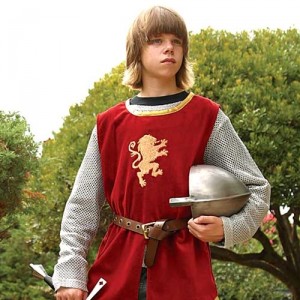
Squire
Warrior Kit
Description: Squires are proto-knights. This kit might also be called the 'knight' kit, but that would make it sound a lot more glamorous and not really give the player the notion of just what exactly was going on in the first few levels of being a squire. Essentially, they are this: a squire is generally noble (taking this kit from a non-noble background is possible but requires some forethought and explanation, working with the DM). Around the age of eight, noble boys are generally fostered off to serve as a Page to some lord or overlord that their parents want to form a bond with. While this is most often someone of higher social standing, it may also be someone of equal social standing (indicating a horizontal alliance), or perhaps of equal or less standing but with greater resources. Either way, when that Page turns 14 he becomes a Squire.
Squires generally expect to be knighted after serving on at least one campaign. They begin play as younger than most PCs (14+1d4 years old rather than 16) indicating their tendency towards a lower age range. They are also in the service to a knight or lord, and generally amongst a number of other squires doing the same. If the DM and player cannot decide on the number of other squires present serving the lord, feel free to simply roll 1d6-1 to determine the compatriots the squire has. The DM will have to generate personalities and alignments for all these characters by whatever means he deems suitable.
The PC will be directly subservient to a knight or lord, responsible for cleaning weapons and armor, serve as a cupbearer at meals, and otherwise kowtow in the hopes of establishing a lasting bond.
Weapon Proficiencies: Squires under 16 may not begin play with specialization. They are required to take a weapon proficiency in dagger, arming sword, and lance. Their last slot is theirs to choose.
NWPs: Squires generally learn etiquette and heraldry first and foremost; they spend no time learning reading and writing in general. However, individual squires may vary in their appetites and thus there are no required profs here except riding.
Equipment: Squires are taken care of by their lord. They receive 5d6x10gp to buy equipment and must return everything unspent over 25gp after purchase.
Special Benefits: Squires can reasonably expect to be knighted after showing valour on the field or achieving the 3rd level, whichever comes first. Those who are not heirs to their patrimony (generally anyone who is not 1st in the birth order, though the laws of certain kingdoms may allow partible inheritance or selection of an heir outside of the primogenetic one) can also expect their services with their lords to continue indefinitely if they establish a good relationship. By the time they are knighted (becoming a "Sir," or "Sieur" in the Third Empire and most surrounding lands), if they retain a good relationship with their lord and are not the heirs of their land, they will be granted 5 hides of land (which supports 20 or so peasant families) as a knight's fee to retain their service.
This territory generates, on average, 750sp/house (for a total of 15,000sp/annum) or 3,000sp/hide/annum if there are enough men to work it. Of course, these men are assumed to work their own fields for 3-5 days a week. This income (1,500gp/annum) is expected to pay for all weapons and harness (medieval term for armor) of the knight as well as for him to outfit and equip 5 or so peasants from his territory to serve as a levy in case they are called. This fee or duty is to serve his lord in an army for up to 40 days without pay (save food). If the year is better or worse, the soil better or worse, adjust the income appropriately.
A knight in service to his king may expect a fiefdom at level 9 if he has performed well, served as good counsel, and otherwise made himself indispensable to his king. Knights of other lords generally will not receive land at level 9, but may be given important posts before that. Once knighted they can be named seneschals, stewards, or bailiffs of any territory their lord rules. A count or baron generally holds between one and ten towns (possessing 200-500 people each) and at least one central village (possessing around 1,200 people, or 300 households).
Knighting Ceremony: This is generally a brief ceremony and can be performed just as easily on a battlefield as in a temple or a castle yard. Knights in the 10th Age are made by kneeling before their lord, placing their hands within his, and swearing to be his leal servant. The knight is then slapped or cuffed hard enough to bruise him to remind him of his duty and asked to rise. There is no temple involvement, as the 10th Age is still very much in the early medieval/late classical mode and the ceremony remains one of the military elite, not something controlled by the crown.
Special Hinderances: Squires, unless they serve the king, never get land grants at level 9. They must obey their lord in all things and tend towards the Lawful alignment (though this is by no means required).
They are saddled with a master who may be of any alignment the DM chooses, or his alignment and rank may be rolled on the following weighted tables. The increased rank of evil characters takes into account the desire of one's parents not to send the child to a bastard—thus, if the character is evil, there is generally some other consideration at play, such as increased power of a patron.
Lordly Tables
Alignment (d20)
1-8. LG
9-10. LN
11. LE (add +1d4 on the rank table)
12-13. CG
14. CE (add +1d8 on the rank table)
15-17. NG
18-19. TN
20. NE (add +1d6 on the rank table)
Rank (d20)
1-5. Lowly Baron (1d4 towns, 1 village)
5-8. Baron (2d4 towns, 1 village with a 20% chance of a second)
9-10. Count (2d8 towns, 1d4 villages)
11-13. Great Count or Duke (2d10 towns, 1d8 villages)
14-15. Counsellor of the King (holds a court title, roll again for rank, do not add alignment bonus)
16-17. Key Land (holds an important fortress or march, roll again for rank, do not add alignment bonus)
18. Great Counsellor (holds a court title, roll again for rank, do not add alignment bonus, add +1d6 instead)
19. Heir to the Throne (as a Great Count or Duke, plus he will be king someday)
20+. The King (you know)
Races: While any race may become a knight, only Wind Elves in Arunia have a comparable practice of knighting and knighthood in their own culture. Generally, races will only serve their own as knights, though the smallfolk (being well-integrated in pastoral life) may serve either elves or humans with some frequency.
Wednesday, April 9, 2014
Playing Servants, Part the First: the Groom
For the first part of this little experiment, I've written up a number of kits that would be useful for playing different kinds of household servants. Note that this takes much more prep work from the DM just as it does for the players—it's impossible for the PCs to be servants in a game where the DM hasn't worked out the power structure of a kingdom, for example.
Groom
Warrior kit
Description: The groom is a cross between a military and household servant, something above a stableboy but below a squire. They can be common or noble and care of their master's horses is their primary charge. Many grooms eventually find themselves knighted or even given lordships (much as in history, see John Marshall for one such example). Grooms duties may extend as they prove themselves to that of Marshal of the house, which commonly bears the security of the lord and his people as an additional burden.
Grooms may be outfitted to fight when war arrives, and are expected to be at least somewhat knowledgeable about riding. If sent to foster from a noble family, the groom is likely to have had training in a number of mounted weapons.
Weapon Proficiencies: For a common groom, the following list—horseman's mace, knife, dagger, short bow, hand axe, club, quarterstaff, and pitchfork. Common grooms would be unlikely to start play with specialization. After level one they can learn any weapon they like, and specialize as well. Noble grooms—arming sword, horseman's mace, horseman's pick, spear or lance (depending on period), horseman's flail, knife, dagger, hand axe. Noble grooms are commonly specialized in one weapon, generally a spear or other horseman's tool.
NWPs: Grooms must take the animal handling, animal training (horses), and heraldry proficiencies. Noble grooms must buy etiquette. Any others (if they have additional slots) are up to them. All grooms receive riding for free.
Equipment: Common grooms begin play with whatever equipment their lord sees fit to provide. This often, but does not always, include a tabard and cloak, and weapons of some sort. To simulate the general reliance of a common groom upon his lord, return any money not spent over the amount of 3 gold pieces once equipment purchasing is complete. Noble grooms may begin play with whatever they want and can afford, as the money comes from their parents holdings. They may (15% chance) also receive the benefit of a small rent income from their family, generally 2d20 gold pieces a month.
Special Benefits: After displaying some great prowess in battle, grooms are commonly made into knights or even promoted to be Marshal of the House. All grooms receive free food and board (like most servants) for as long as they continue to serve their lord. Additionally, when wearing the arms of their lord they are granted a +2 reaction bonus when interacting with those who also like their lord (though they may be penalized if the subject does not like their lord). If they are to go into formal battle, their livery and armor will be purchased by their lord—a shirt of mail, shield, and weapon of choice. Upon being knighted they are presented with an arming sword and a suit of mail. If they have not been knighted by level 5, they are knighted then. If they have not been granted titles and lands by level 9, they receive them then as per a normal fighter.
Grooms are much more likely to attract horsemen and knights to their cause than other types of followers.
Special Hinderances: To receive any of their benefits, the groom must remain faithful to his lord. Common grooms have no further hinderances. Noble grooms must spur themselves onwards to ever more dangerous tasks in hope of recognition—they live for promotion to knight or Marshal, something common grooms generally do not take into account.
Wealth Options: As per a warrior.
Races: Most commonly humans. Halflings and gnomes cannot ride and so make poor grooms of this kit, though they may still serve in the stables.
Tuesday, March 18, 2014
Kits and Things: The Knights of Miles
Knight of Miles (fighter kit)
Description: This character is a second or subsequent son of the Heartland nobility of the Empire. Knights of Miles swear allegiance directly to the Emperor and are in turn knighted by him. They are generally given residences in the city of Miles as well as access to rents provided by tenancies in the countryside. Knights of Miles are always addressed as Sieur. In order to become such a knight, a character must have a strength and constitution of at least 14—there are no weaklings amongst the emperor’s chosen.
Role: In a campaign, Knights of Miles serve as a distinctive arm of the emperor; they are, along with the imperial tagmata, his personal and private army that he relies on no feudal lords to raise. They are a boisterous fraternity of men and women who practice the martial art together and often enact the emperor’s personal will on the battlefield and off.
They are well-heeled and educated, the children that might otherwise go on to cause a baronial succession crisis in their home baronies. Characters starting out with this kit are likely to begin as squires aspirant in the Knightly Order, assigned to a more important knight who will show them the ropes, give them tasks, and accompany them.
While most Knights of Miles are generally upright and at least moderately honorable men (after all, they are knights), not all are. The DM will secretly roll for the level and alignment of the PCs patron on the following table:
1-4. Lawful Good
5-7. Neutral Good
8-9. Chaotic Good
10-13. Lawful Neutral
14-16. Lawful Evil
17-19. Neutral Evil
20. Chaotic Evil
Level: 1d4+1
Secondary Skills: We don’t use these
Weapon Proficiencies: All knights of Miles must take the following WPs: arming sword, lance, horseman’s flail or horseman’s mace or hand axe. While Knights of Miles may train in bows, they will only use them as a last resort.
NWPs: Bonus: (Miles) Etiquette, Heraldry, Riding (Land-based). Recommended: Dancing, Gaming, Hunting, Tracking, Local History, Musical Instrument
Equipment: Pages begin the game with a free shirt of chain armor and a weapon of their choice.
Special Benefits: +2 reaction bonus to anyone who is pro-imperial. The possibility for intimidation of others exists. Pages are automatically knighted when they reach level 3 and may be knighted earlier for valor. Upon receiving a knighthood, they are granted a townhouse in Miles and a farm-rent as well as a host of minor functionaries to deal with it. Income can be calculated here, with most knights receiving 1-2 households of rent upon promotion and more as they serve their emperor.
Special Hinderances: Pages must go where their masters go. Knights must adhere to the chain of command. Those who stand against the imperial expansion of power (particularly local Dynasren/Dukes) resent the Knights and are much less likely to help them and indeed may attempt to detain or hinder them.
The Order
The Grandmaster
The Chapter Houses (of which there are 3)—Sword, Lance, Axe
Chapter Captain
Lance Captains
Conrois
Pages
Tuesday, July 16, 2013
The Southmen
There's not a lot of African folk in fantasy. Exceptions can, of course, be found. There are Summer Islanders in GRRM, who have dark skin, there are Tom-tom and One-Eye in Glen Cook... but again, they're more the exception than the norm. I hope the same cannot be said in the 10th Age. I've placed Zesh, the origin of mannish magic and much of its culture, quite far from the main framing of the setting. However, sea-routes do exist and have been used from the Iron Cities and the Zeshimite interior to the north. There are a number of important NPCs who are Zeshimite, the most obvious being Wah Khar One-eye, the pirate-captain turned High Master of Essad.
But trade between the Onyx Cities and the north is probably more prevalent than I've yet let on. Khewedi ships pour into Miles every month to bring grains from the desert land. Onyx Cities ships should be docking with great frequency at Noranos to exchange the secret products of the jungle lands with the men of the north. The fruit of strange trees, onyx, obsidian, and other things which can only be found south of the Red Desert fetch humongous prices. Milean nobles are particularly fond of the plumage of the rainbow dove.
The lands around the Onyx Cities are politically unstable. Oruna, the great veldtland to the south, produces great numbers of tribal warriors who upset the balance in the Cities. The Zeshimite interior is home to other hungry tribes that beset their walls. Each of the great Onyx Cities has their own standard, their history, and their own traditions. Like the infamous Free Cities of the East, the Onyx Cities also universally lack something: their own armies.
In this case, however, they pay tribal mercenaries to go to war with one another or proxy-states to do battle with their foes. They hire Mugharians and ogres, the last of the great Giants from the Iron Waste in Oruna, or northerners who can fight their wars for them. They elect powerful sorcerer-generals to lead these sellsword armies... but this tradition bears upon the north not for its effects on the cities of onyx themselves, but rather for the militarization and mercenarization of the landscape that surrounds them.
Onyx Cities Mercenary
Men of all stripes and nationalities fight for the Onyx Cities. However, a character taking this kit is most likely of Zeshimite, Mugharian, or Orunan heritage as those who come from abroad are usually higher than level one and have their own backgrounds to go with them. To become an Onyx Mercenary, a character must have a strength of at least 12, and a constitution to match.
Role: The mercenaries of the Onyx Cities cut their teeth fighting wars for their "more civilized" patrons, the Zeshimite men of the Onyx Coast. They can double as policing forces in times of peace, but they are just as frequently bandits, highwaymen, and harassers. It is difficult indeed for a LG character to maintain his beliefs as a member of one of the standard companies.
Equipment: Onyx Cities companies are outfitted in all manner of ways. Some have rigorous company standards, while others wear strange piecemeal garb and do not look at all alike. Whenever someone plays an Onyx City Mercenary, it is up to them and the DM what company garb looks like. In fact, they should create the flavor of the entire company together.
If the company requires a certain set of equipment, the PC may purchase it at half price.
Special Benefits: The Onyx City mercenary has the following benefits:
Onyx Cities Mercenaries may specialize for free in one of the following weapons: Shortbow, spear, javelin, longspear, club, large flail, bolas, net, or trident.
Additionally, as long as they remain with their company they receive free room and board (sometimes in the form of a tent and camp rations, sometimes based on the company contract).
Special Hinderances: Onyx Cities Mercenaries are obviously people who live by violence. They have a -2 reaction penalty amongst civilians, a further -2 reaction penalty against hostile city-states of the Onyx Coast. They are easily identified as mercenaries when in their garb. They must also follow the orders of their company commanders, lest they be expelled.
Wealth: These mercenaries start with 8d4x10 gold.
Races: Only humans may be Onyx Cities Mercenaries, and they must be of Mugharian, Zeshimite, or Orunan origins.
Subscribe to:
Posts (Atom)